
Thirty minutes from Dubai’s skyline, The Chedi Al Bait occupies a cluster of painstakingly restored houses in the Heart of Sharjah, homes that once belonged to some of the emirate’s most influential families. There is no porte cochère, no marble atrium, no lobby pianist working through the Great American Songbook. Arrival is a walk through narrow lanes and shaded courtyards, the city’s noise falling away behind you until all that’s left is birdsong, the rustle of palms and a sense of peace over coral-stone walls.
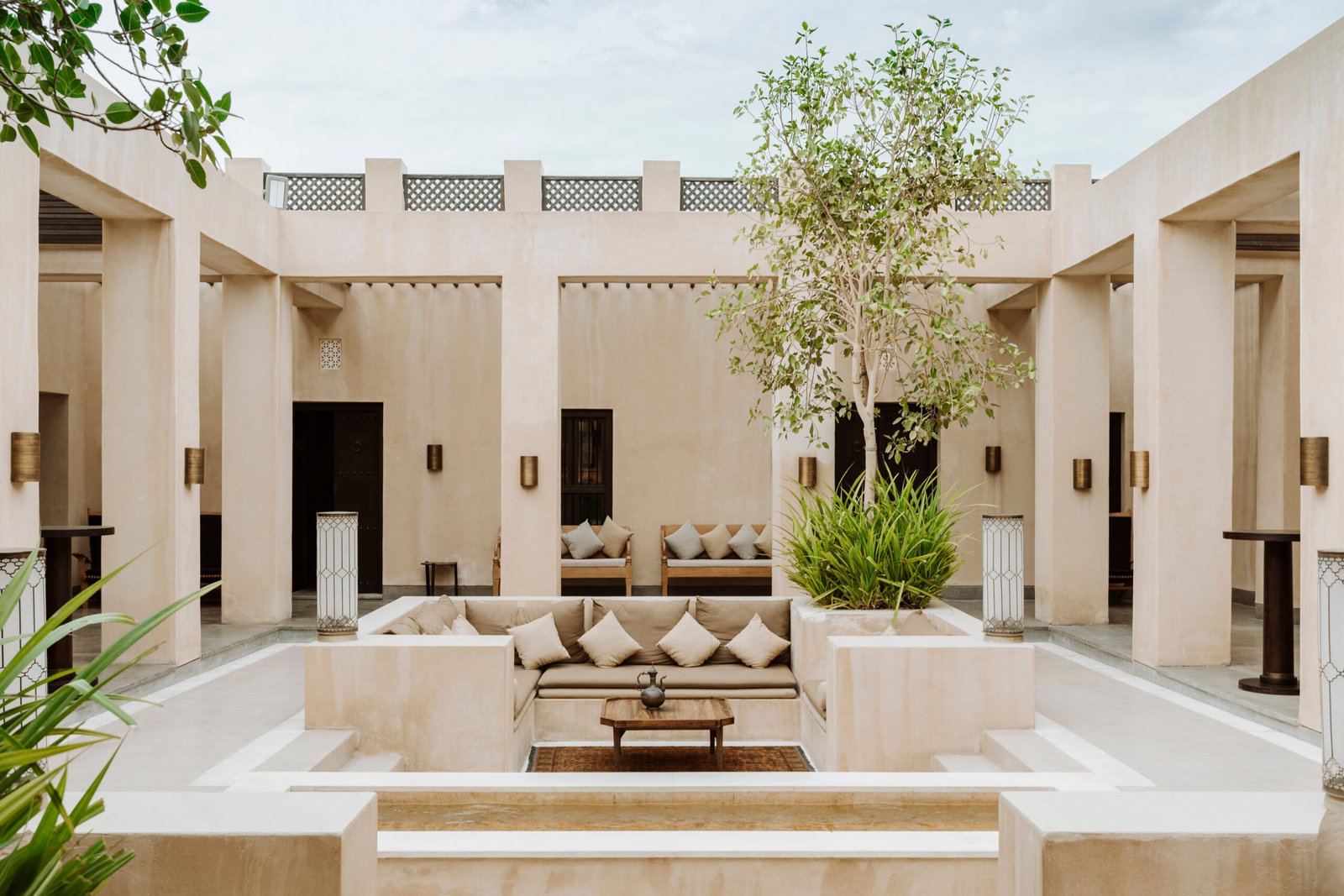
The temptation with a property like this would have been to build something new and drape it in heritage, a wind tower here, a mashrabiya screen there. Instead, The Chedi Al Bait has let the buildings speak first. Original stone walls stand exposed, their rough texture set against crisp plaster and contemporary furniture. Timber-beamed ceilings bring warmth without ornament and the palette defers entirely to the architecture. Nothing here competes with the houses themselves, and that restraint turns out to be the greatest luxury on offer.
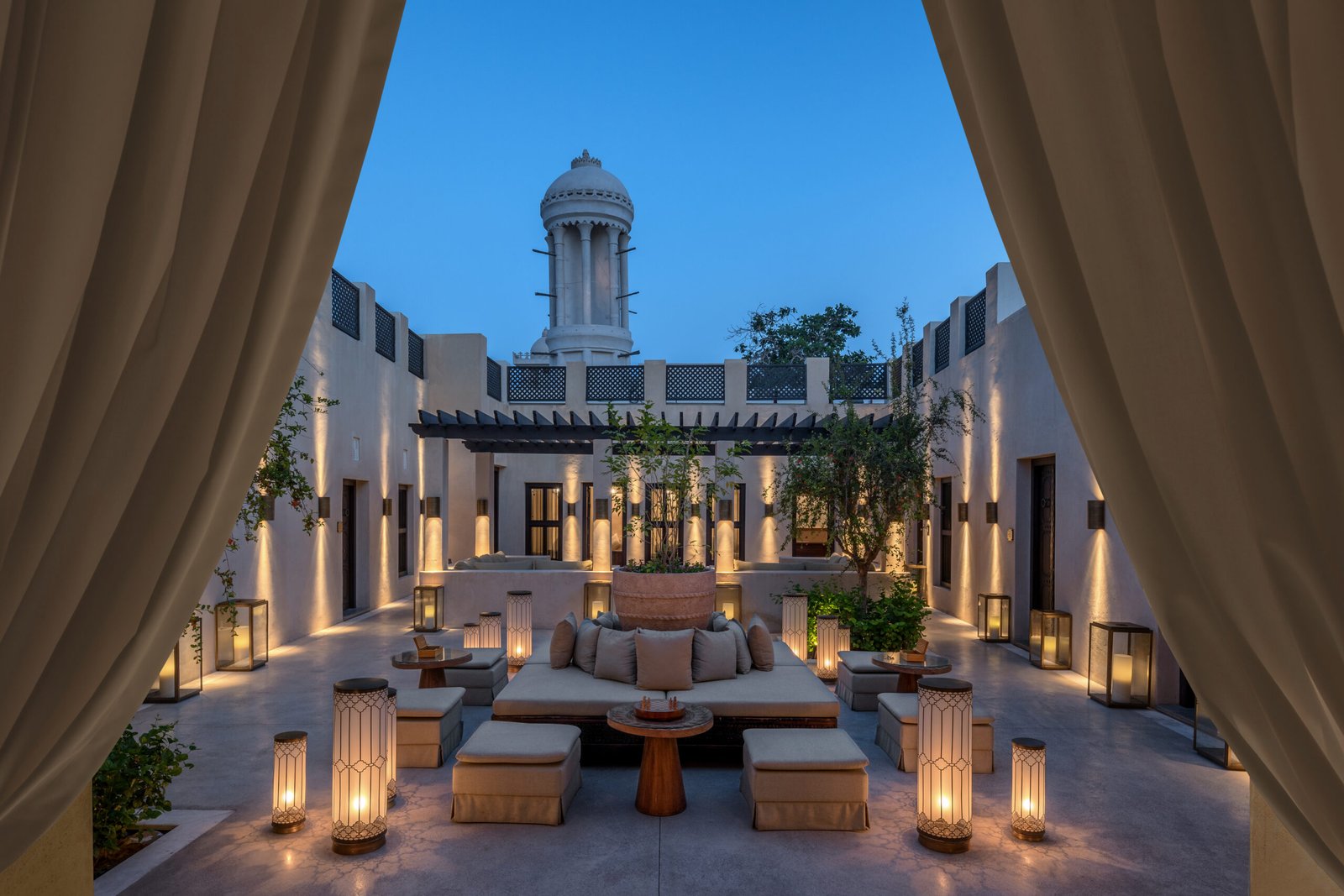
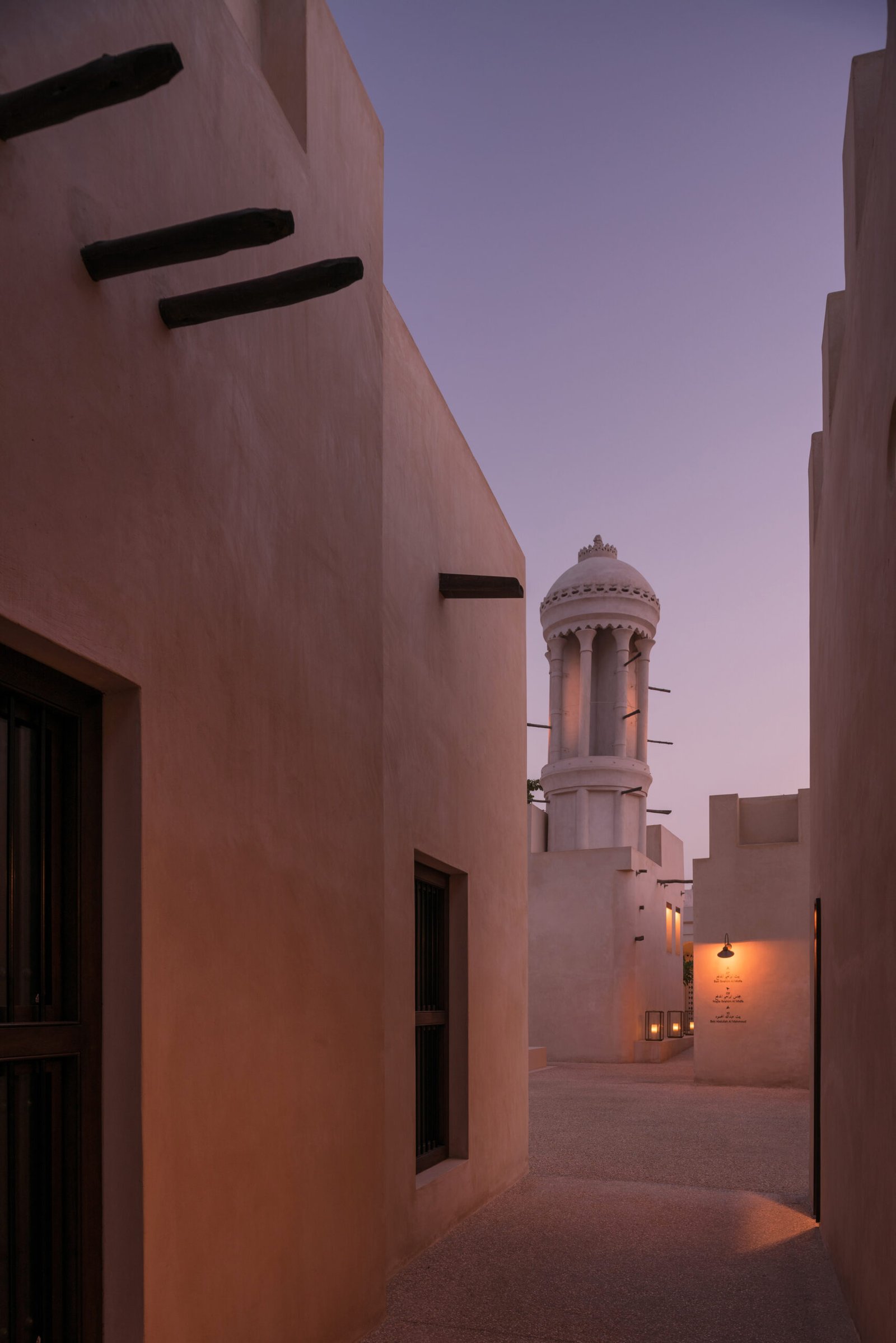
The property’s soul sits inside Bait Majlis Ibrahim Al Midfa, the former home of Sharjah’s first journalist, which now houses The Café. Rising above it is the UAE’s only surviving circular wind tower, a feat of vernacular engineering that cooled these rooms centuries before air conditioning arrived. It functions as the hotel’s symbolic heart, and the Al Midfa family’s story threads through the whole property — in the library’s shelves of regional history, and in the way staff talk about the houses.
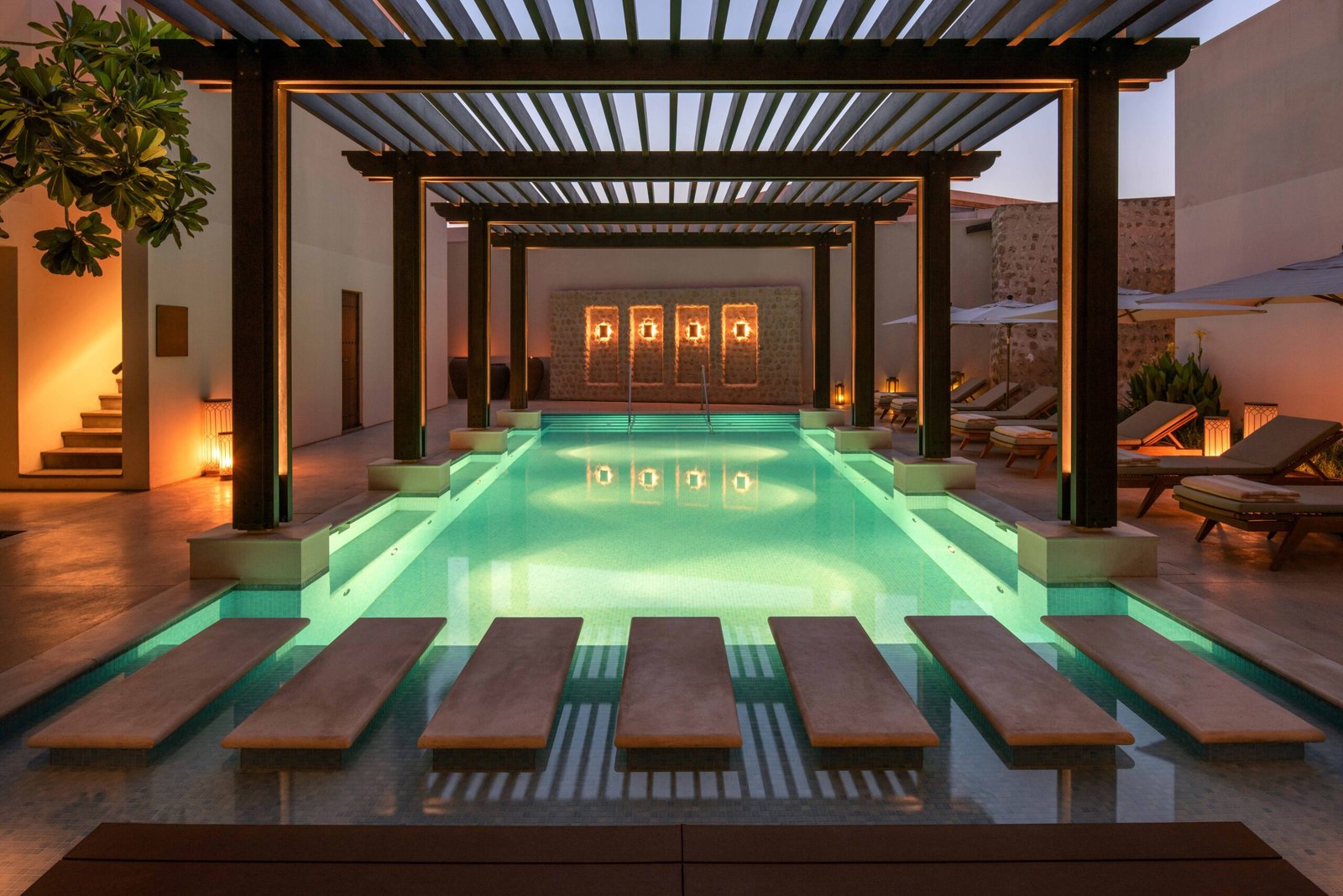
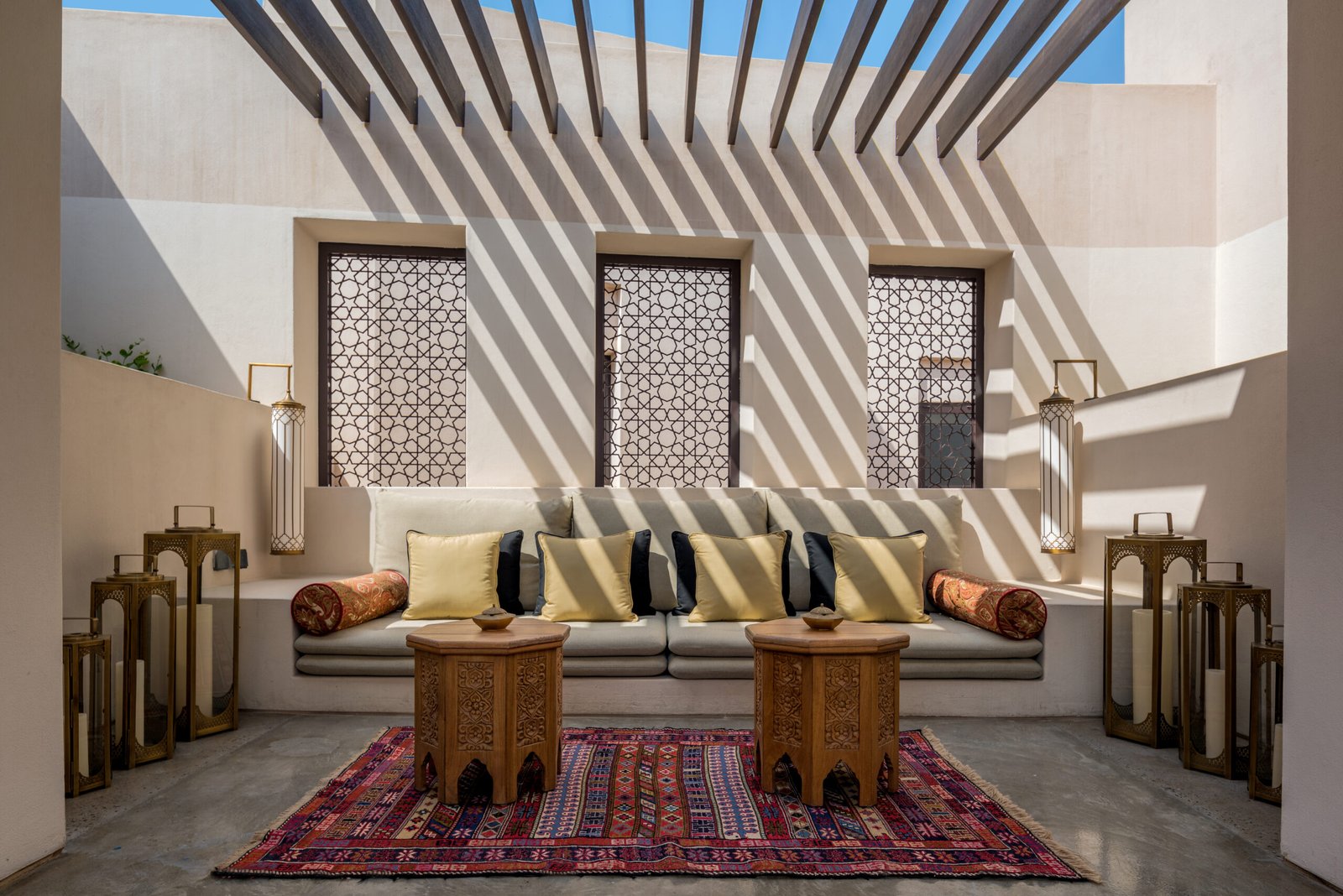
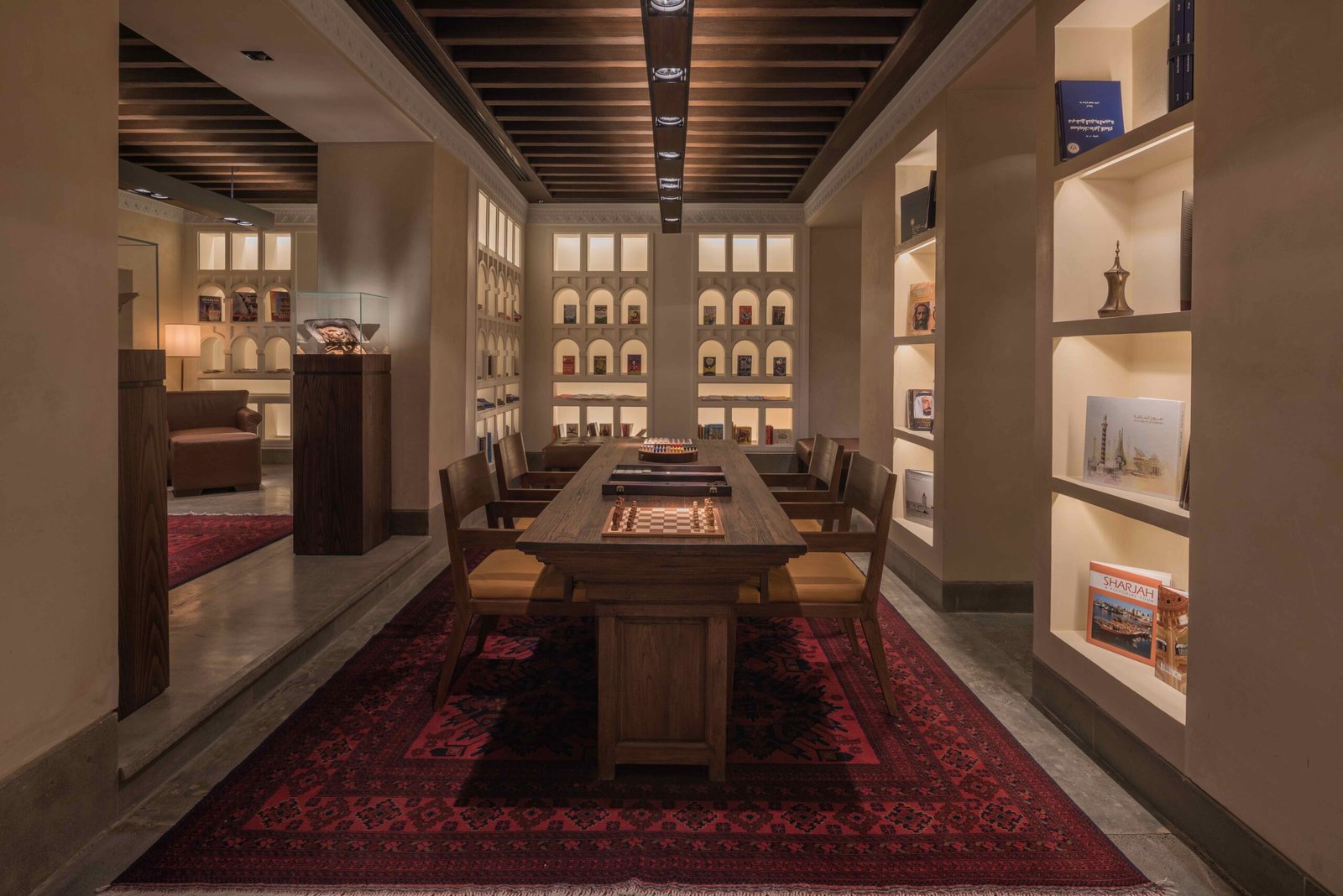
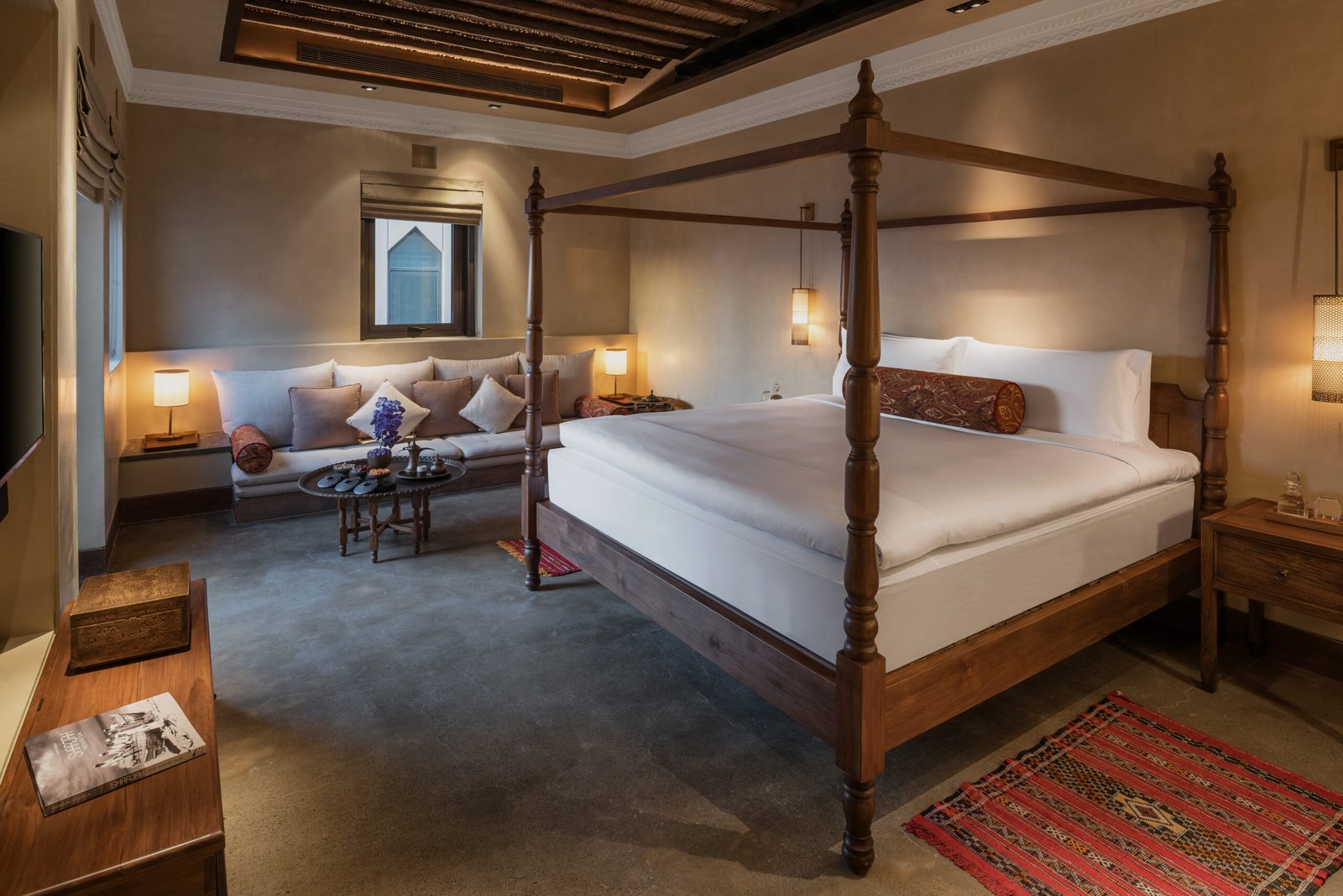
The guestrooms follow suit. Modern comforts are all present and correct, but they’ve been folded into spaces that prioritise proportion, craftsmanship and natural materials over spectacle. The pleasures here are slower ones, like morning light filtered through wooden screens, and cool stone underfoot. The public spaces keep the same register. A library tucked into a traditional courtyard invites guests into Sharjah’s history rather than past it. The spa pairs Middle Eastern wellness traditions with Far Eastern therapies. And the outdoor pool is modest by Gulf standards, a patch of blue amid the dense old-city fabric. Breakfast unfolds in an elegant courtyard where regional, Oriental and contemporary influences meet, while The Café serves Turkish coffee and pastries within centuries-old walls, feeling like the majlis it once was.
The Chedi Al Bait’s real achievement, though, extends beyond its own walls. Sharjah has always played a different game to its neighbours. While other emirates chased spectacle, it invested in museums, conservation and the stewardship of Emirati identity. The hotel is that ethos made bookable. It doesn’t seal guests inside a luxury bubble; it nudges them out into the surrounding souks, the restored heritage buildings, a city whose riches are cultural rather than commercial.
This is not luxury that could exist anywhere else in the world. Every stone, courtyard and doorway belongs precisely where it stands, and has done for generations.