
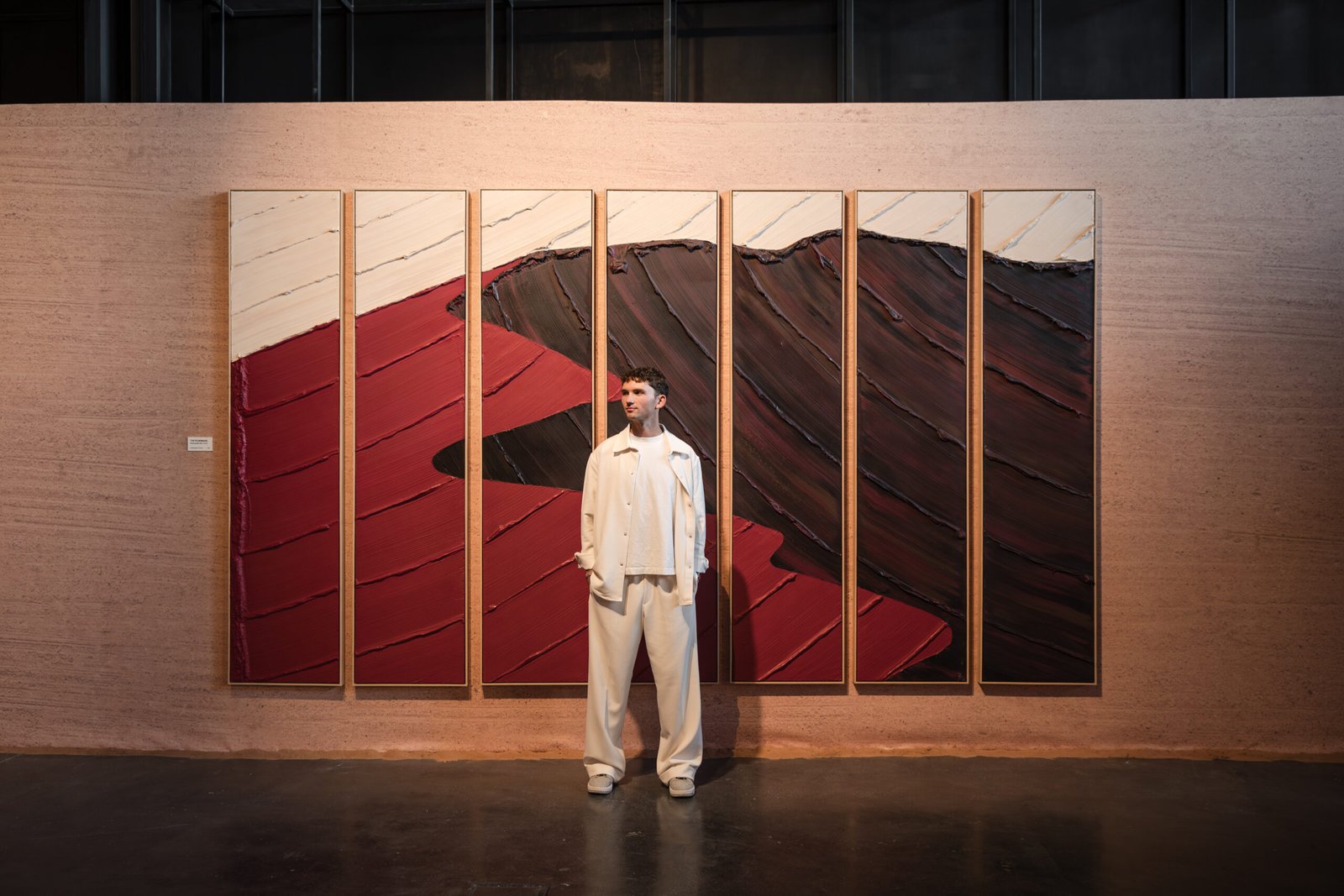
Chances are you’ve seen Werner Bronkhorst’s work without realising it: a flash of textured paint, a miniature figure mid-motion, a landscape that feels both vast and intimate. Yet while his images travel fast online, the world behind them has been forming slowly. Speaking to the Sydney-based, South African–born artist ahead of his debut Dubai exhibition CRACK, it’s clear that his practice, layered, intentional, and emotionally expansive, was never built for the algorithm, even if it mastered it.
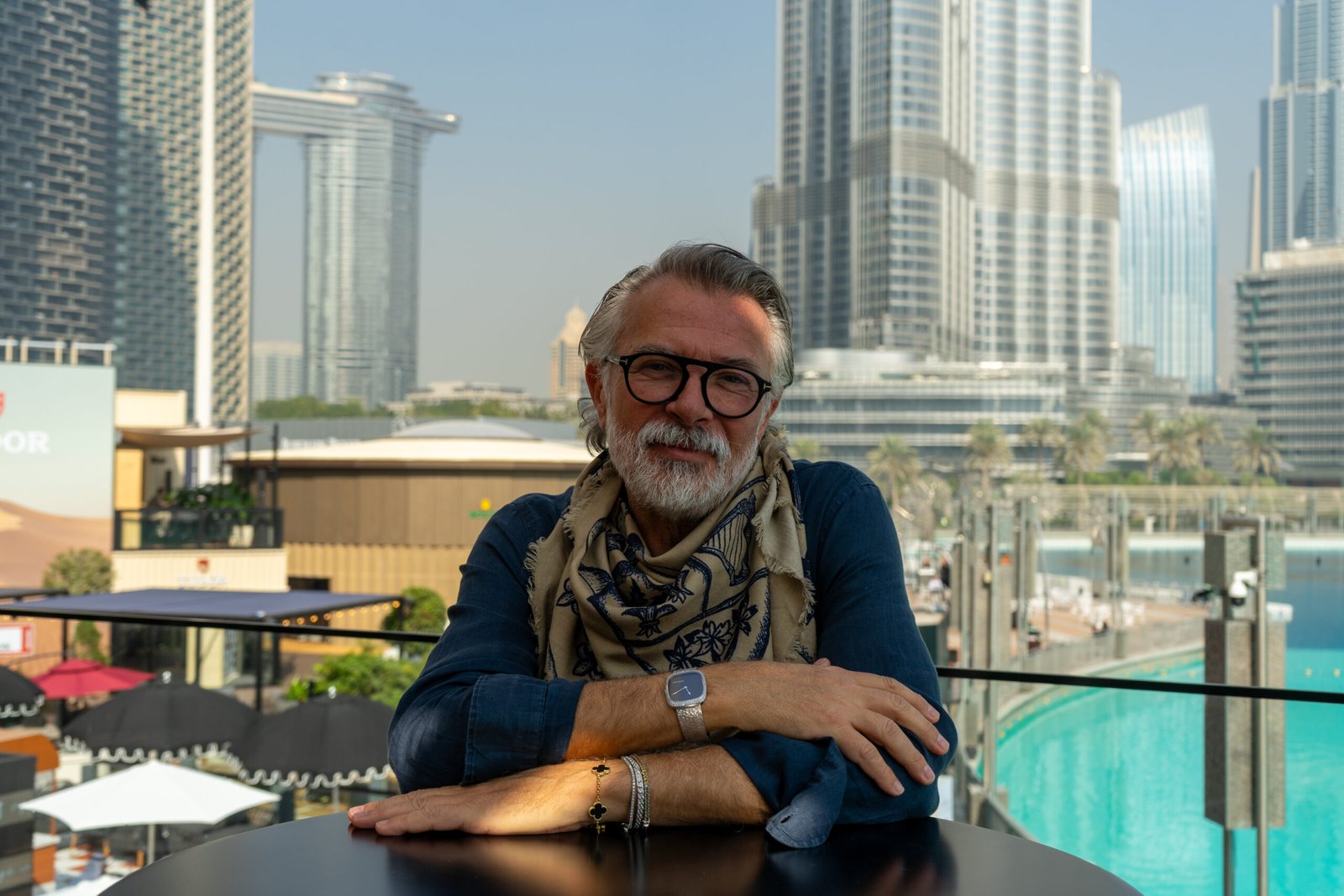
“I’ve been posting for the past 11 years on Instagram alone,” he tells Eyes Arabia on a brisk winter morning in Alserkal Avenue, the heart of Dubai’s cultural scene. Social media has, in fact, become the backbone of his practice. In an art world that spans millennia, Bronkhorst belongs to a generation that has grown up with something unprecedented on its side: direct access. “Being a young person entering the art world, it’s been so interesting having something as powerful as social media on my side because I can reach a global audience at the click of a button.” That access has reshaped not just how his work circulates, but how it is made. For Bronkhorst, process is not a private ritual reserved for the studio, it is inseparable from the artwork itself. “If I can’t post the process or share any of the details of how I’ve created an artwork,” he admits, “then it feels like I may as well not create the artwork.”
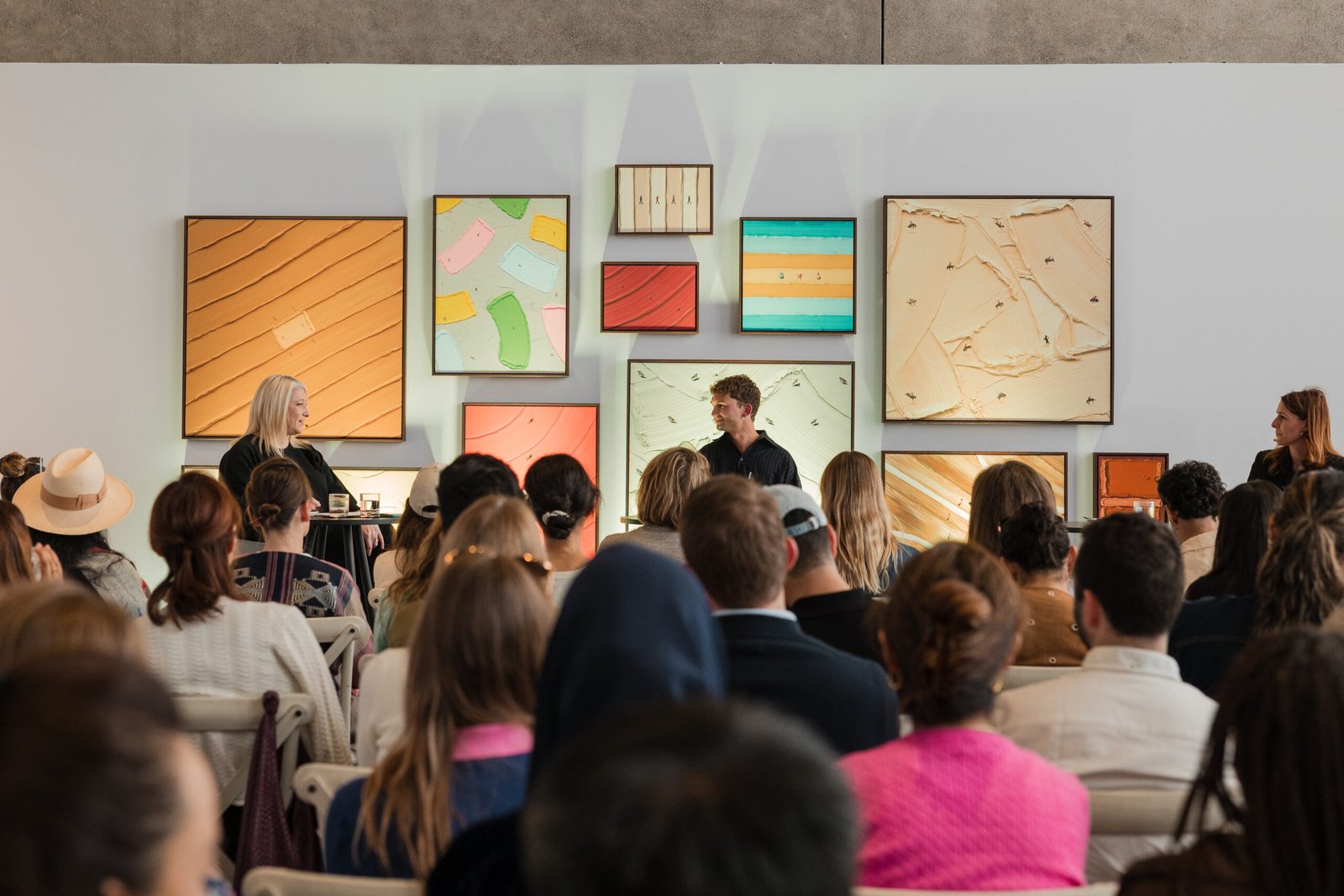
It’s a statement that would sound radical in more traditional circles, but here it lands as a far quieter philosophy. Though, his widely viewed process videos, some reaching millions, aren’t content in the marketing sense. “Sharing every step of the way is just as important as the result,” he says. “People can see not only how I create what I create, but also why I do what I do.” That transparency serves another purpose, too, one that collectors increasingly value. “If they can see my process and see exactly what I’ve gone through to create that artwork,” he explains, “then there’s the deep transparency of knowing its authenticity.” In a world where images circulate freely, showing the scaffolding behind the work becomes a form of authorship.
Still, Bronkhorst is acutely aware of the tension between speed and craft. Social platforms demand daily presence, and painting demands time. “My artworks can take weeks, if not months, to create,” he says. The solution is less about compromise than rhythm. By sharing different stages, beginnings, fragments, completed works from months prior, he avoids what he calls the pressure to “churn and burn.” The pace remains human. That same respect for craft is what has drawn him into collaborations with legacy names across sport and industry. Working with Red Bull, World Aquatics Championships, Lando Norris and Porsche has expanded not just his visibility, but his sense of scale. “It’s really amazing to work with companies you look up to,” he says, “because of their craftsmanship and because of the detail and because of all the time, love and dedication going into what they create.”
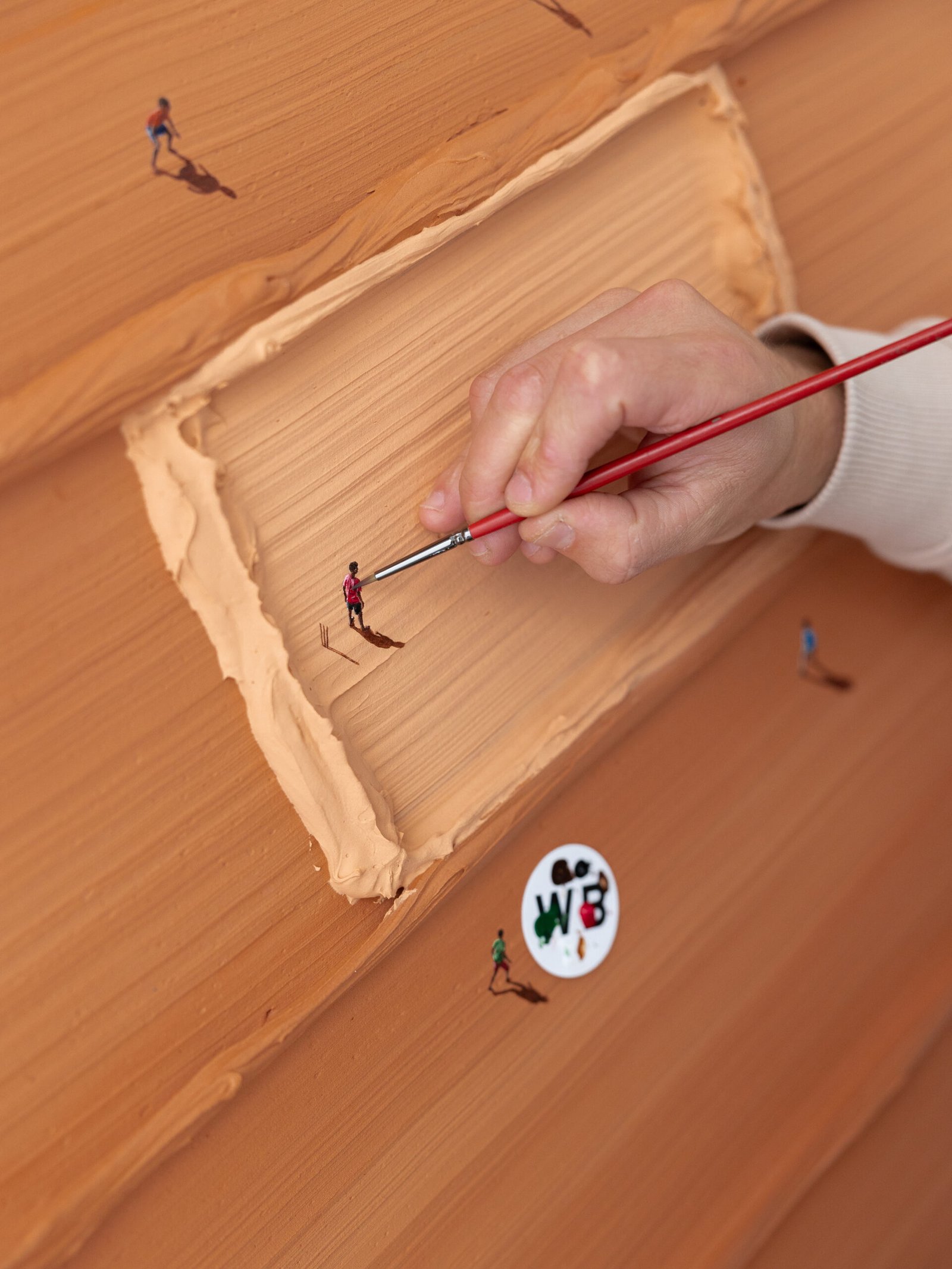
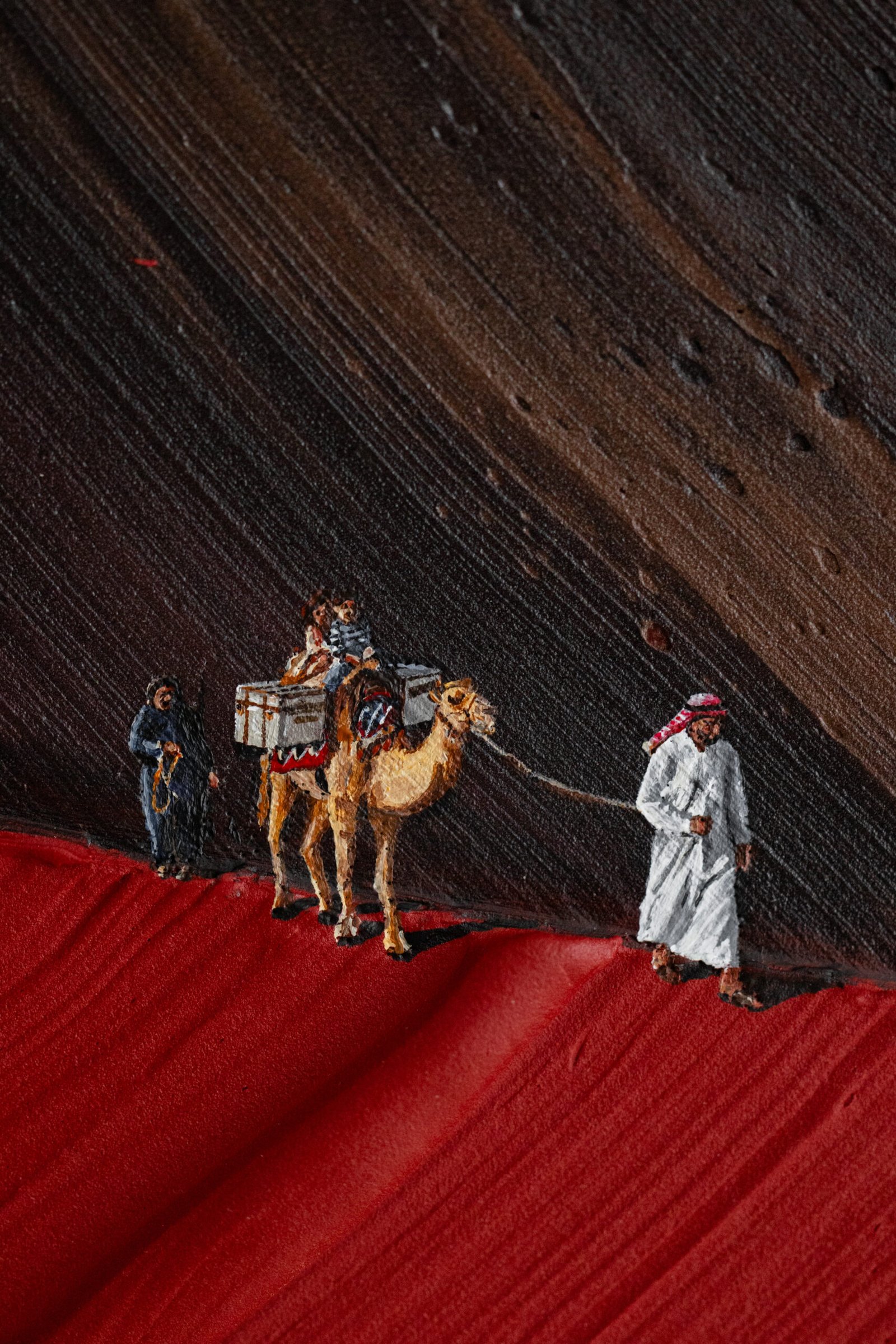
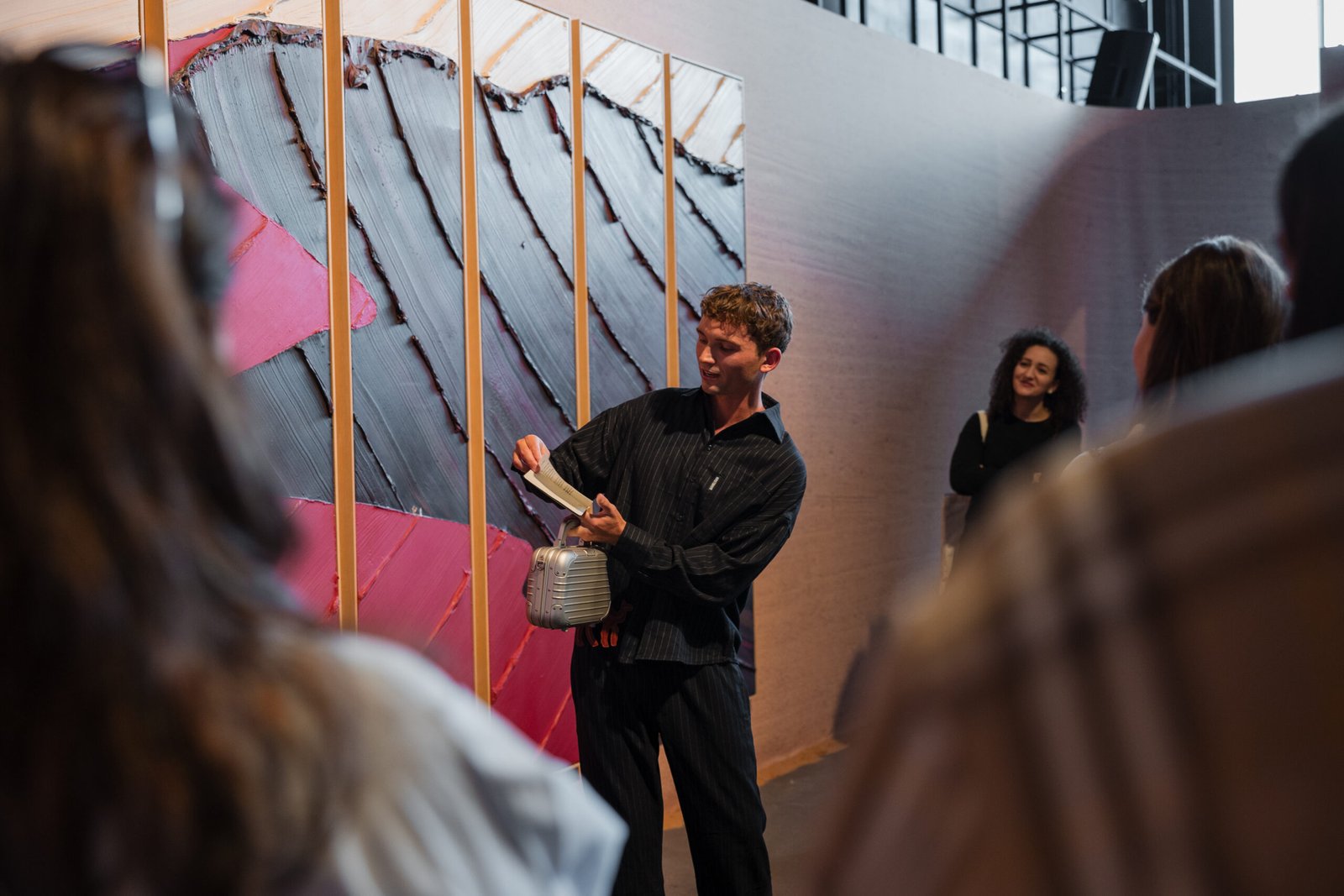
That alignment between time, precision, and obsession is also what defines his paintings. Bronkhorst’s work captures tiny human figures suspended in expansive landscapes. “People do crave something physical, something real, and something that took time to create,” he reflects. “I’m painting people. I’m painting their stories.” He tells us about a woman who once stood in front of a painting of skiers and began to cry. “She said it reminded her of her last trip with her son before he fell ill,” he recalls. “It’s small moments that sometimes could be insignificant to some people, but it means the world to other people.” His figures may be small, but their emotional weight is not. “They’re literally small moments,” he says, “but they are so big.”
It’s this sensitivity to scale that makes Dubai a natural setting for CRACK. The collection is deeply rooted in desert landscapes: camels crossing open terrain, cracked clay tennis courts, rock climbers suspended against heat-scorched surfaces. “This crack collection is fully immersed in desert landscapes and other hot terrains,” he explains. “So for me to be exhibiting in a place that is forward-thinking and loves art and culture, this is the perfect place.”
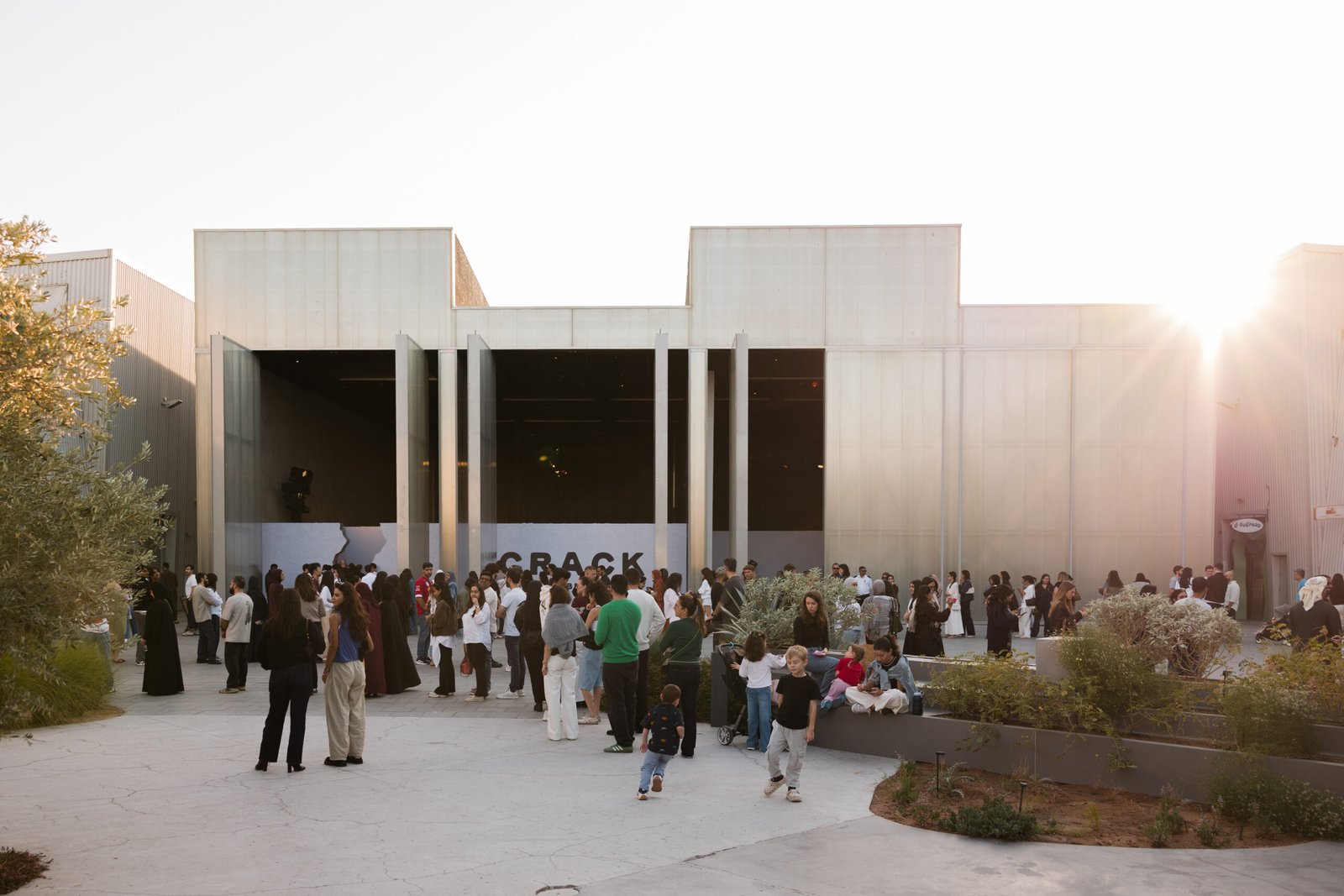
“Art can be so heavy and so serious,” he says. “I want the artworks that I create to uplift people and to kind of just give them new life and new vibrancy and freshness.” In a city like Dubai that values craftsmanship, whether in architecture, design, or engineering, he feels that effort is understood. “There’s a lot of love and desire and vulnerability that goes into me creating,” he adds. “So when I have people that actually appreciate it, that just means the world to me.” And perhaps that’s what lingers most. Not the scale of the platform, nor the global reach, but the quiet insistence that small human moments, rendered with care, are still enough to stop us in our tracks.