
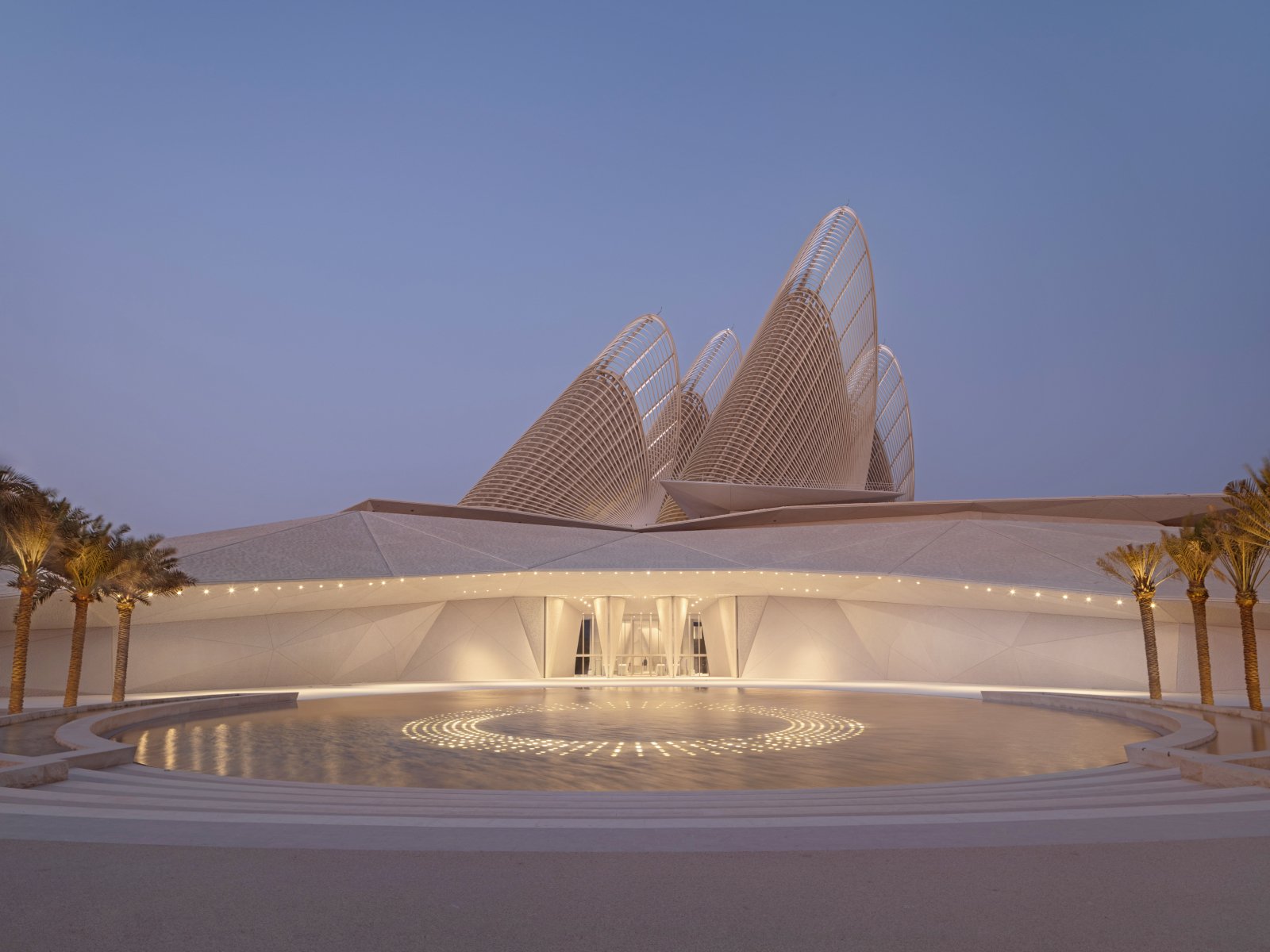
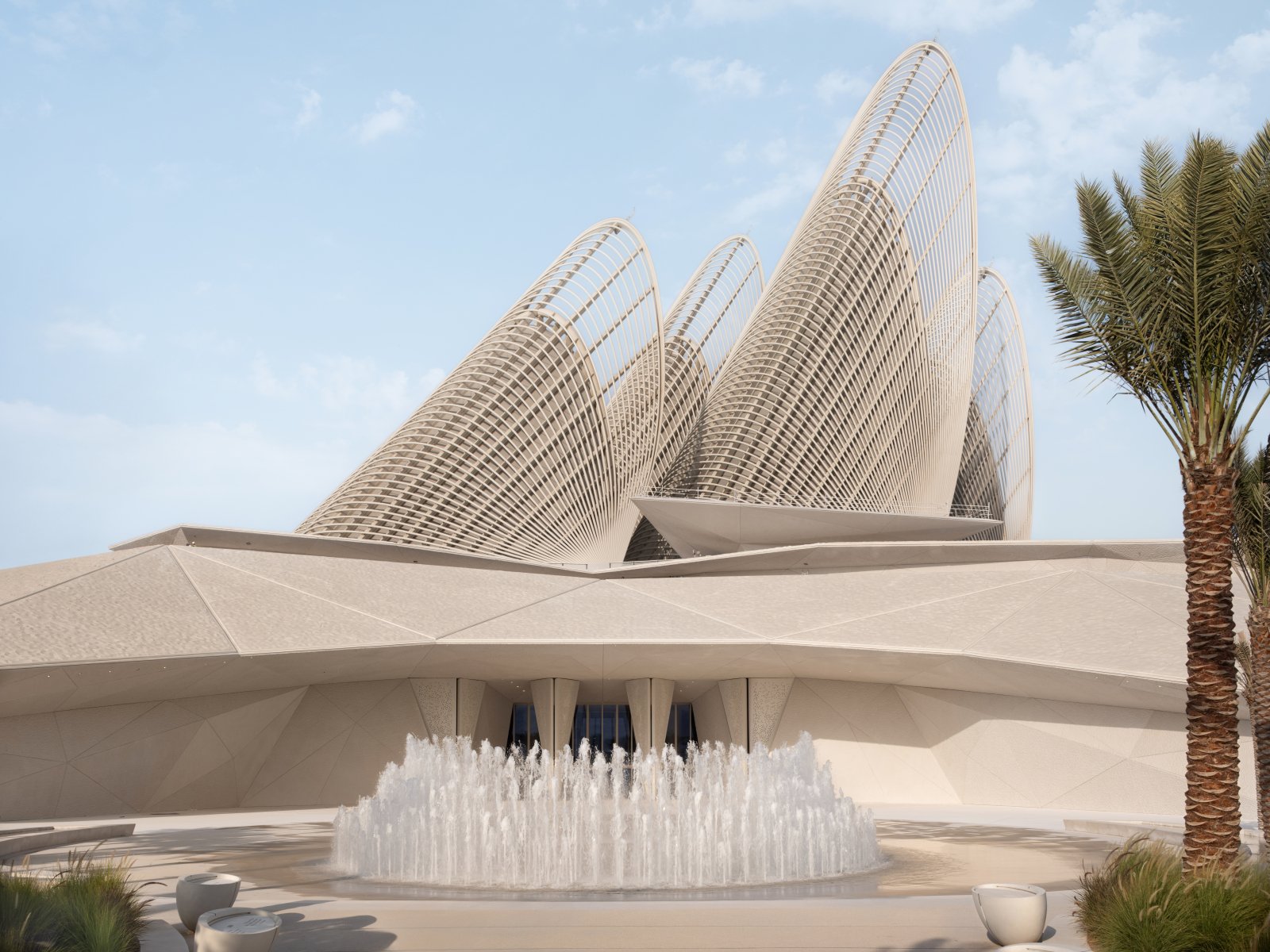
The highly anticipated Zayed National Museum opened to the public at the tail end of 2025, and quickly became a cultural beacon of history and design in the UAE. Rising from Saadiyat Island’s cultural shoreline, the building is built to translate the UAE’s identity into form, light and unabashed scale. Before a single artefact is encountered, Zayed National Museum announces itself through design alone. Conceived by Lord Norman Foster, its architecture consists of five soaring steel towers pierce the sky at deliberate angles, their feathered profiles inspired by the outstretched wings of a falcon. Both symbolic and functional, these towers are engineered to act as thermal chimneys, drawing hot air upwards and naturally cooling the interior spaces below. It is sustainability embedded into symbolism, and a modernist feat that’s undeniably grounded in regional logic.
Clad in a palette that mirrors the desert landscape, the building sits in quiet dialogue with its surroundings, commanding attention without overpowering its neighbouring institutions in Saadiyat Cultural District. Within walking distance of Louvre Abu Dhabi, teamLab Phenomena Abu Dhabi, the Abrahamic Family House and the Natural History Museum Abu Dhabi, Zayed National Museum distinguishes itself through restraint rather than spectacle, its power lying in sheer attention to detail.
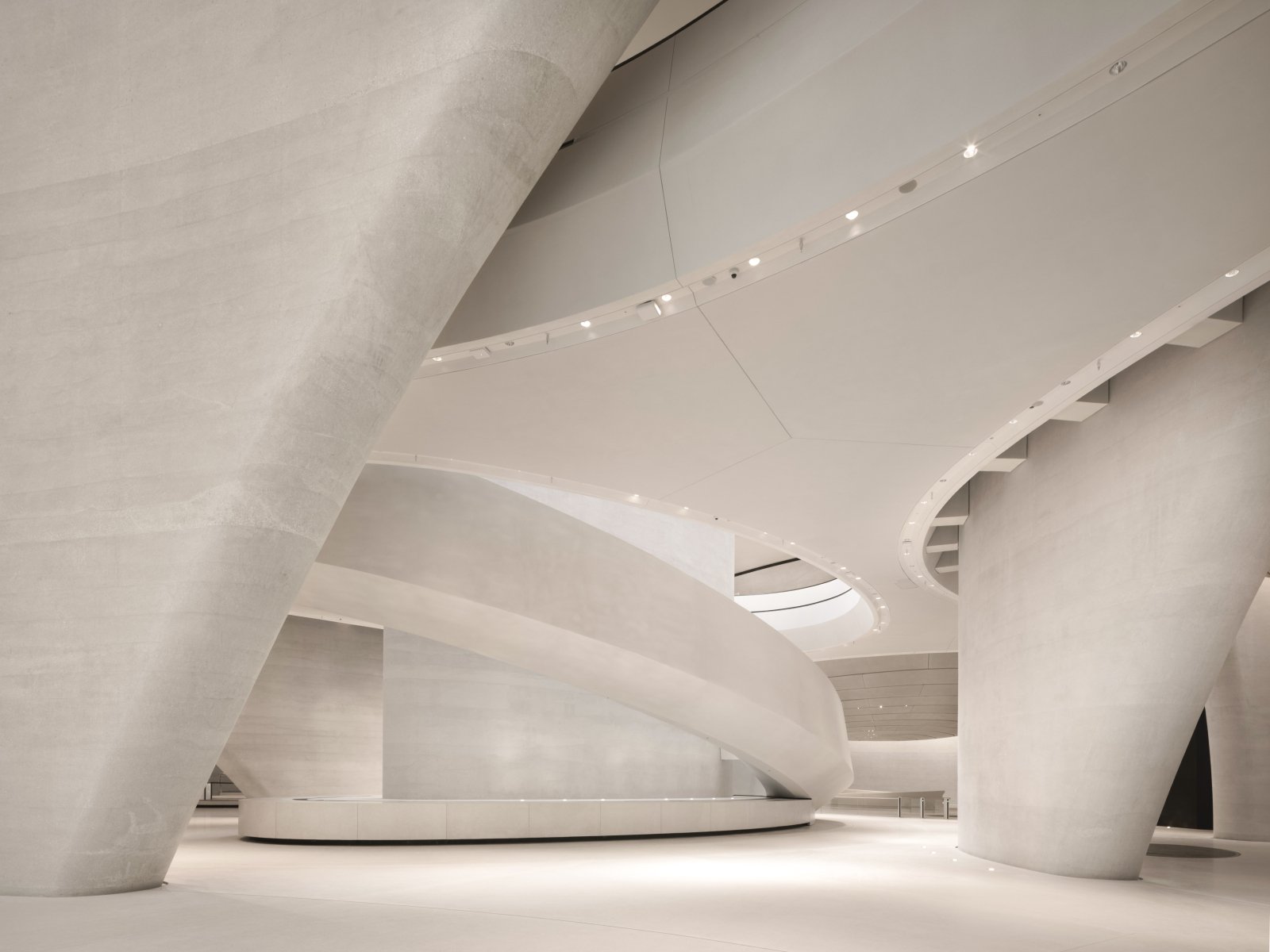
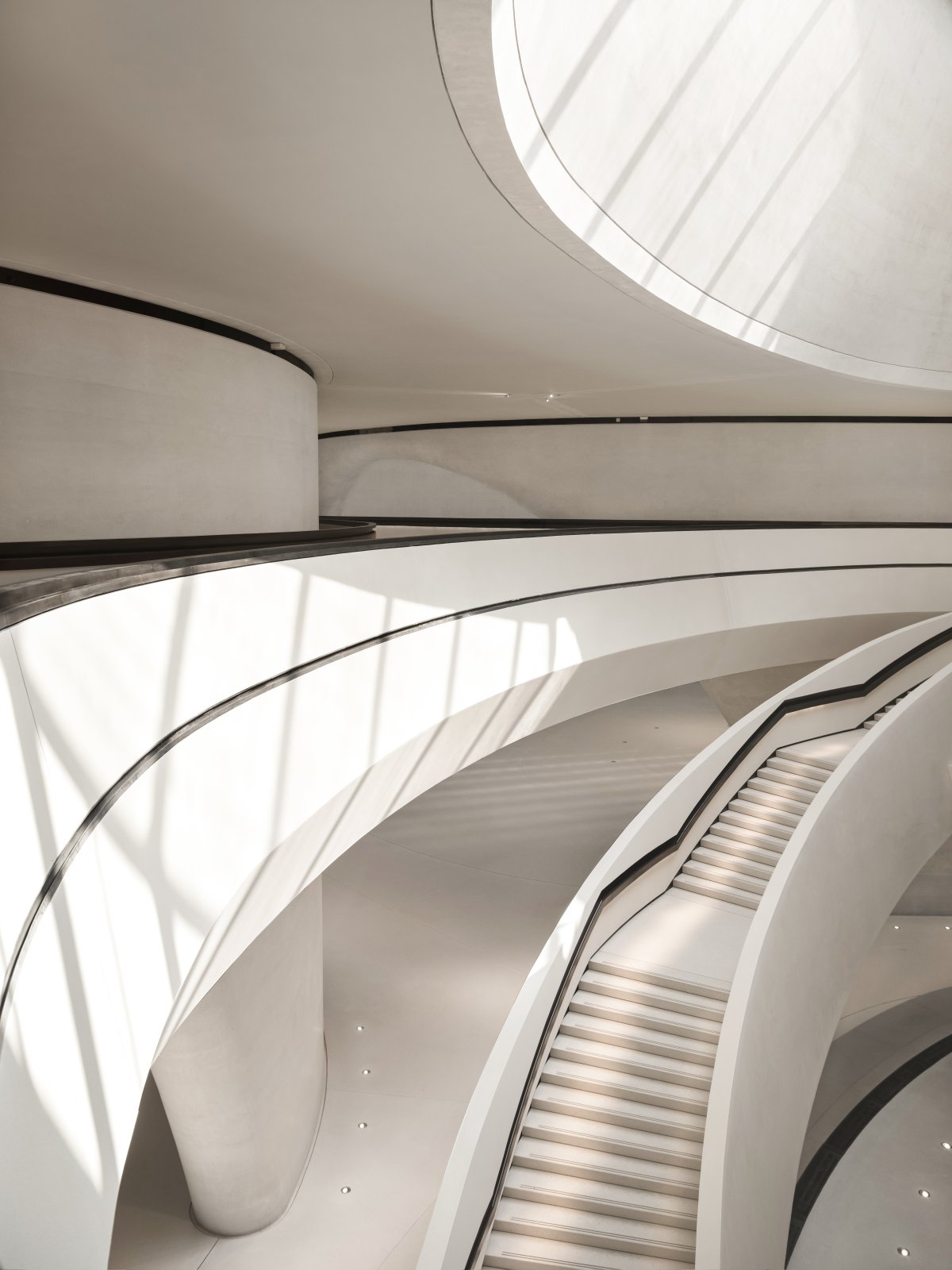
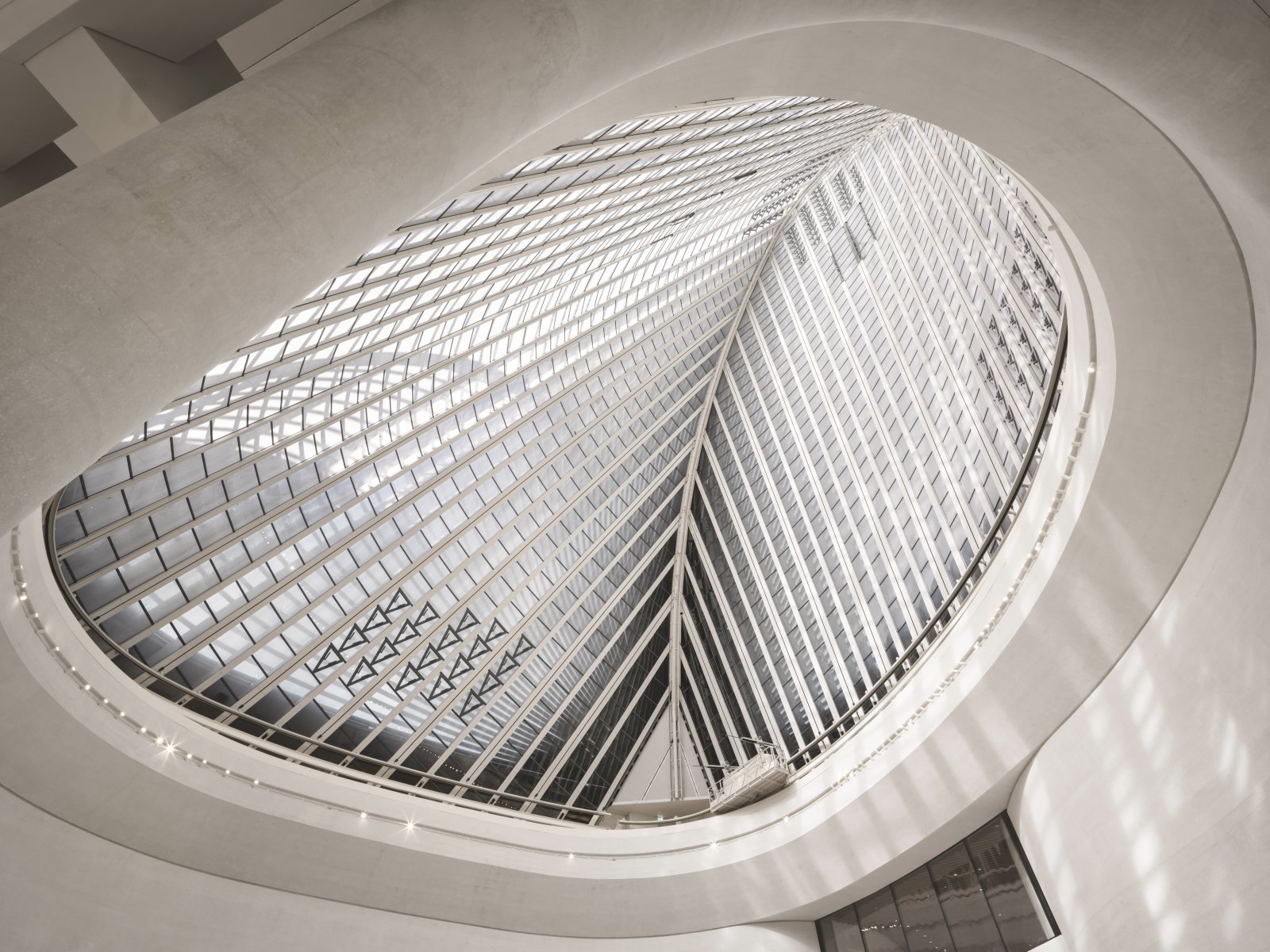
Inside, the design language shifts to meditative as galleries unfold with a careful choreography of light and shadow, using spatial compression and expansion to guide the visitor emotionally as much as it does physically. Natural light is filtered through architectural apertures, echoing traditional Emirati approaches to cooling and illumination, while contemporary materials from brushed steel to stone and timber ground the experience in modernity. Objects here are given space to breathe. In Our Beginning, the gallery dedicated to Sheikh Zayed bin Sultan Al Nahyan, scale is used sparingly, allowing key objects, such as Sheikh Zayed’s iconic black Chrysler, to carry narrative weight. As the galleries move further back in time, the design becomes more tactile. The Our Ancestors exhibit space employs darker tones, textured surfaces and lower lighting levels to evoke archaeological depth. Nearby, a reconstructed section of Al Ain’s Hili Grand Tomb is integrated seamlessly into the gallery’s architecture, blurring the line between exhibition design and built environment. Even the smallest artefacts, like the 8,000-year-old pink pearl, are equally staged with precision.
In such a forward-thinking place as Abu Dhabi, technology is of course woven into the design with intention. Housed in the Through Our Connections exhibit, interactive screens are embedded flush within walls and tables, maintaining visual continuity while animating archaeological discoveries. The effect is immersive without feeling intrusive, digital storytelling that complements, rather than disrupts, the physical space. Yet, the most cinematic design moment arrives in By Our Coasts. Here, the galleries open up, echoing the expansiveness of the sea. Boatbuilding, navigation and pearling traditions are explored through layered displays, suspended elements and fluid sightlines. Lighting shifts subtly, mimicking the movement of water, while large-scale projections bring the stories of Arab navigators like Ibn Majid into sharp, contemporary focus.
What sets Zayed National Museum apart is its confidence in architectural storytelling. Rather than relying on spectacle, the museum uses proportion, materiality and environmental intelligence to communicate meaning. Every design decision feels wholly rooted in place. Thus, in a country increasingly defined by iconic structures, Zayed National Museum stands out not by being louder, but by being deeper. It is a building that asks visitors to slow down, to look closely, and to understand how design can carry memory, identity and national vision forward.