
By the time Ferrari unveiled the interior of its first EV earlier this week, it was clear this would not be a story about powertrains or kilowatts. Luce, meaning light or illumination in Italian, arrives instead as a philosophy made physical, a study in how design, engineering and emotion can converge to redefine what driving feels like in a post-combustion era. What Ferrari has revealed is not simply an interior, but a defining moment in contemporary automotive design. Presented as the second phase of a three-part launch, it offers a first look inside the Ferrari Luce ahead of its exterior debut later this year. Its significance lies not only in what it represents for Ferrari, but in who shaped it.
The interior and interface have been developed in collaboration with LoveFrom, the creative collective founded by Sir Jony Ive, the designer who helped define Apple’s design language alongside Steve Jobs. Few figures have had a greater influence on the relationship between technology, design and everyday life over the past half-century. That perspective now enters the automotive world at a pivotal moment in its evolution. Following Apple’s decision to step away from its own automotive ambitions, Ive’s focus through LoveFrom shifted to a small number of highly selective collaborations. A long-standing relationship with Ferrari executive chairman John Elkann, combined with a shared belief in design as a cultural force, made Ferrari a natural partner. Alongside Marc Newson, Ive was given the freedom to rethink what an electric Ferrari could feel like from the inside out.
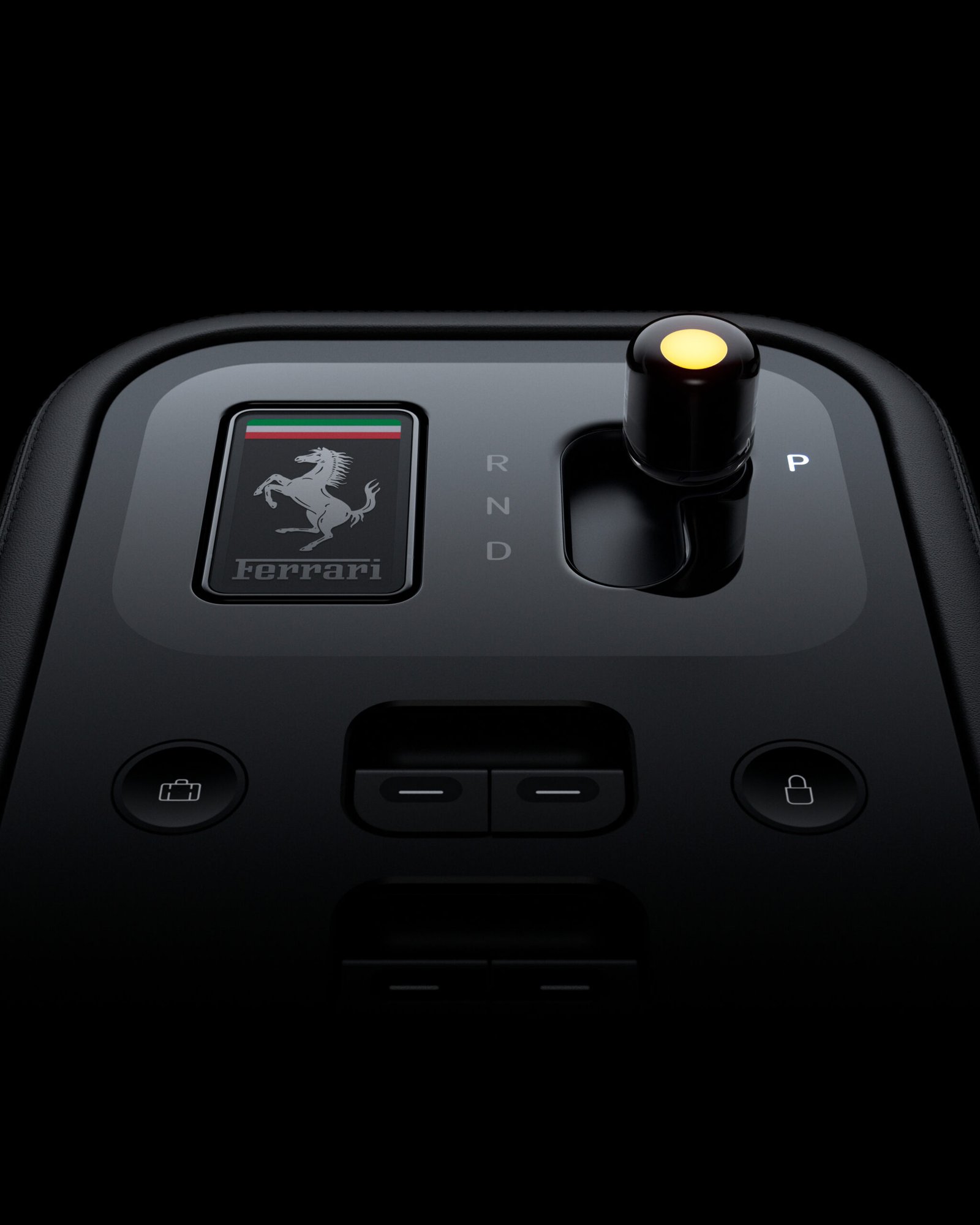
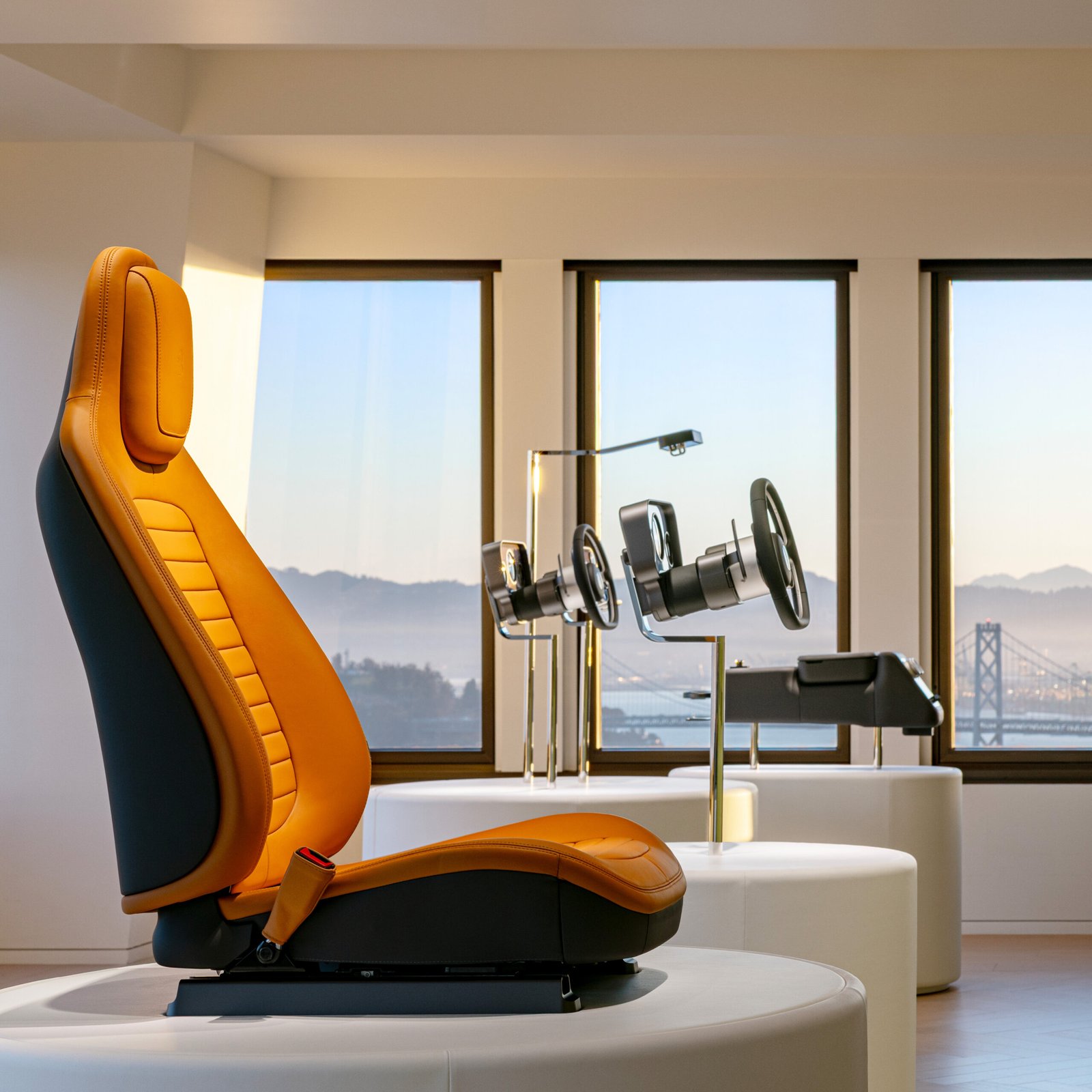
While the exterior of the Luce will be revealed in May, the interior tells the deeper story. LoveFrom’s work redefines the user interface and driving environment with a clarity and restraint more commonly associated with the world’s most refined consumer technology. The result is a cockpit that feels deliberately simple yet highly resolved, where physical controls, displays and materials are treated with equal precision.
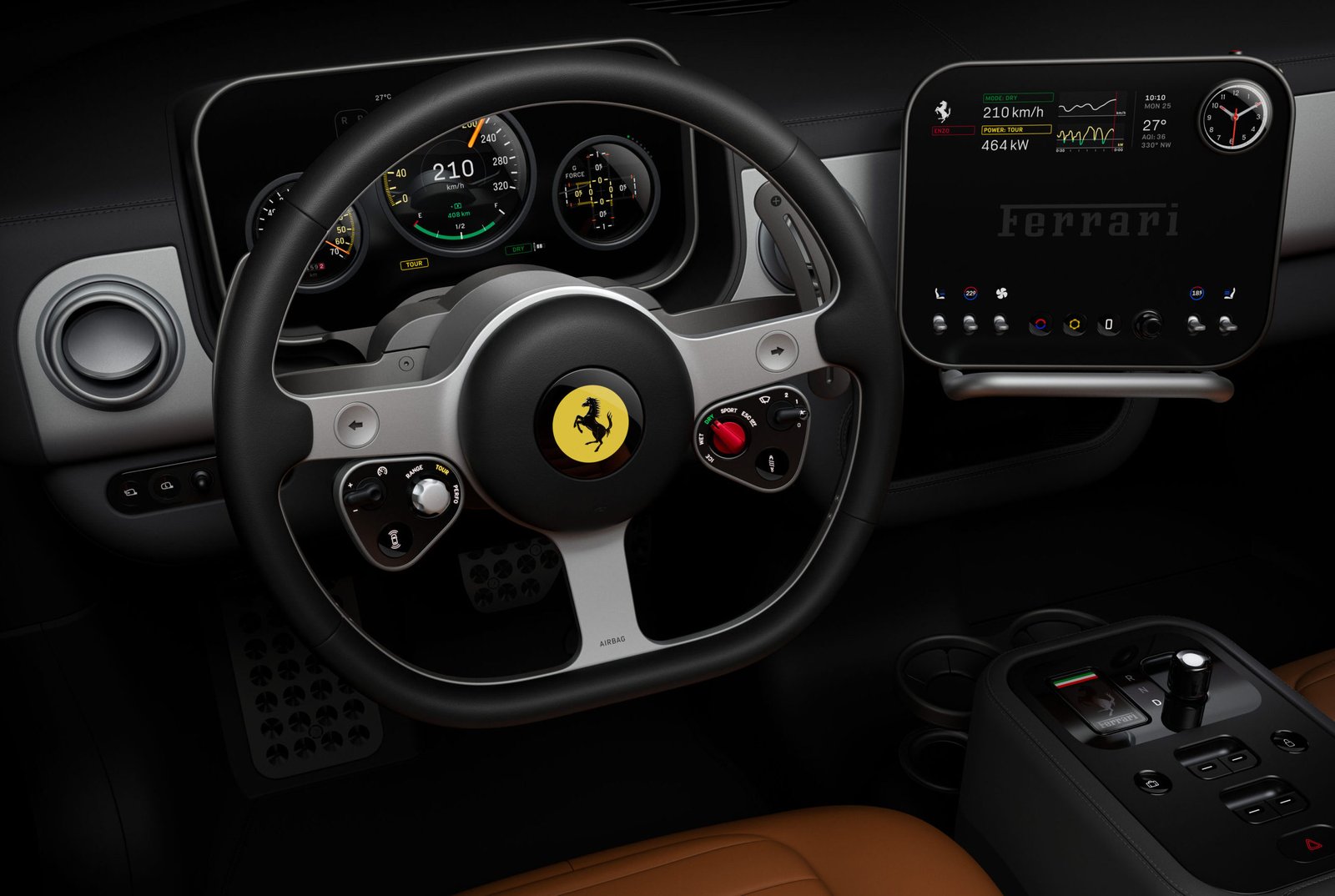
At first glance, the architecture appears understated. A steering wheel, a driver binnacle and a self-contained central display sit against a sculpted aluminium structure punctuated by four precisely formed air vents. In reality, achieving this level of simplicity is the most complex challenge of all. Every element has been reduced to its essential purpose, prioritising focus, tactility and the act of driving itself. Here, the interior is not a secondary space. Ferrari used the moment to introduce an entirely new way of interacting with a performance car.
The Luce’s human-machine interface rejects the prevailing logic of electric vehicles dominated by oversized touchscreens. Instead, it reasserts something almost radical in 2026, tactility. Precision-engineered mechanical buttons, toggles, dials and switches sit alongside digital displays, each interaction designed to feel deliberate, intuitive and satisfying. Electrification may change how the car is powered, but it does not dilute the emotional dialogue between driver and machine. Inside, the cabin is conceived as a single, clean volume. Forms are simplified and rationalised to create an environment that feels calm, spacious and intensely focused on driving.
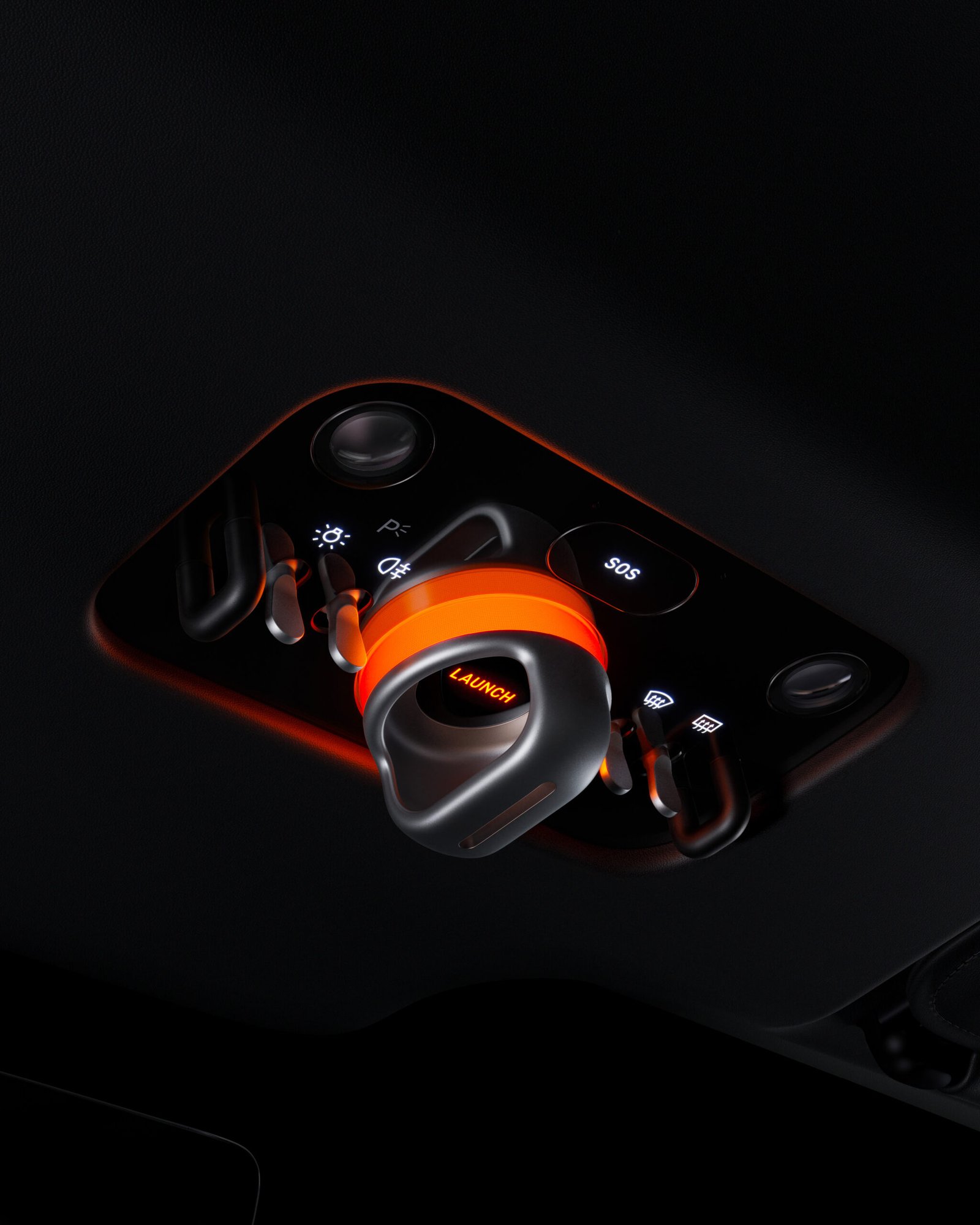
If Luce signals illumination, it does so through material honesty. Aluminium plays a central role, chosen for its strength, machinability and visual integrity. Every aluminium component is crafted from a 100 percent recycled alloy, CNC-machined from solid billets using advanced three- and five-axis processes, then anodised to create an ultra-thin hexagonal microstructure. The result is a finish with exceptional hardness, resistance and depth of colour. Even unseen components are treated with obsessive care, reinforcing Ferrari’s belief that craftsmanship is defined as much by feel as by appearance. Glass, too, becomes a defining element throughout the cabin. Precision-milled Corning Gorilla Glass appears across the control panel, binnacle, central console and shifter, delivering durability, scratch resistance and optical clarity.
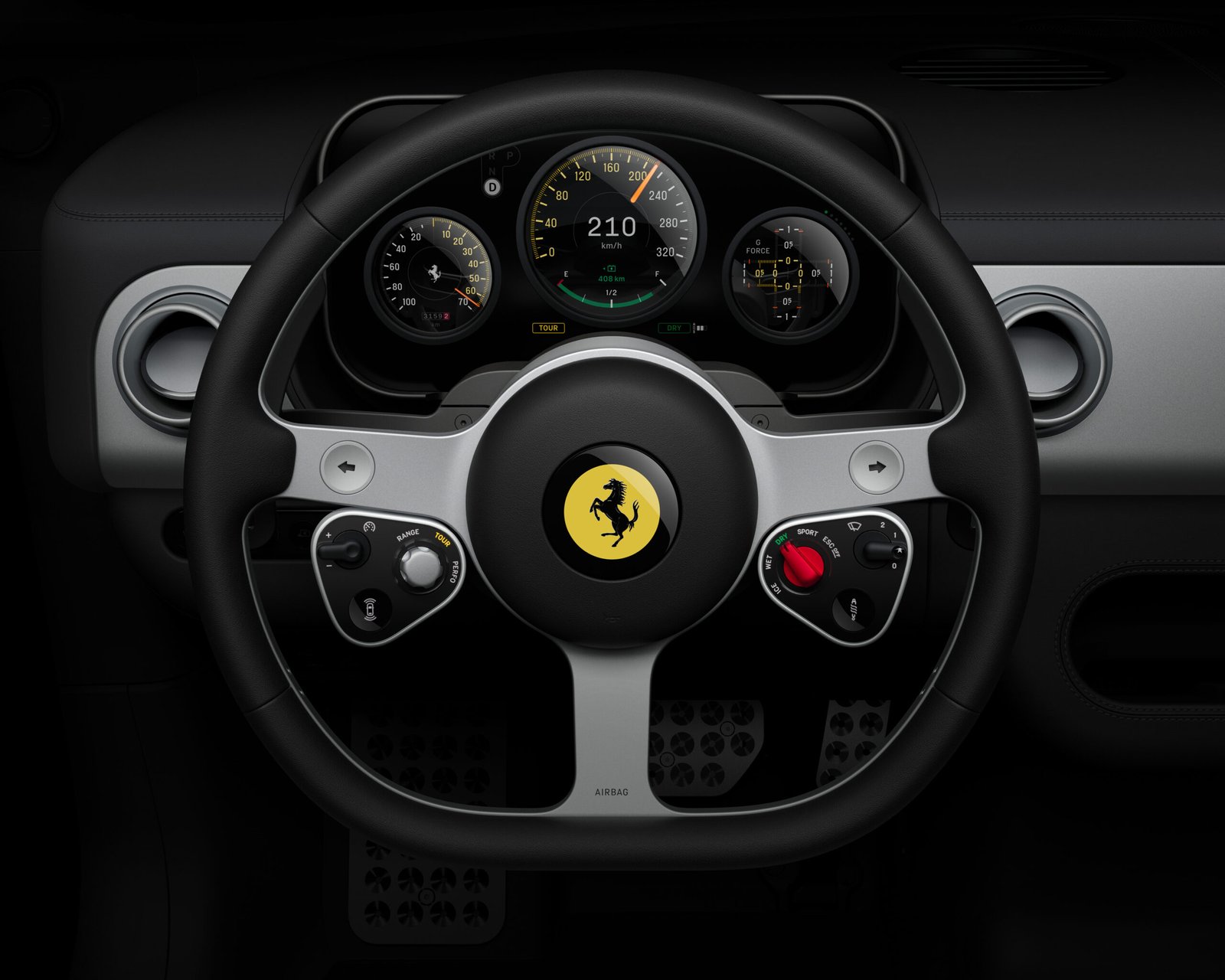
At the heart of the driving experience sits the steering wheel, a simplified three-spoke design that subtly references the wooden Nardi wheels of Ferrari’s 1950s and 60s icons. Its exposed aluminium structure celebrates material strength, while its construction of 19 CNC-machined parts makes it 400 grams lighter than a standard Ferrari wheel. Controls are organised into two analogue modules inspired by Formula One single-seaters, each button refined through extensive testing with Ferrari’s test drivers to perfect both mechanical and acoustic feedback. Starting the Luce is also intentionally ritualistic. The key, crafted from Gorilla Glass, features an automotive-first E Ink display that consumes power only when its colour changes. Inserted into its dock on the central console, it shifts from Ferrari yellow to black, triggering a choreographed sequence as the control panel and binnacle illuminate, transitioning the car from stillness to motion.
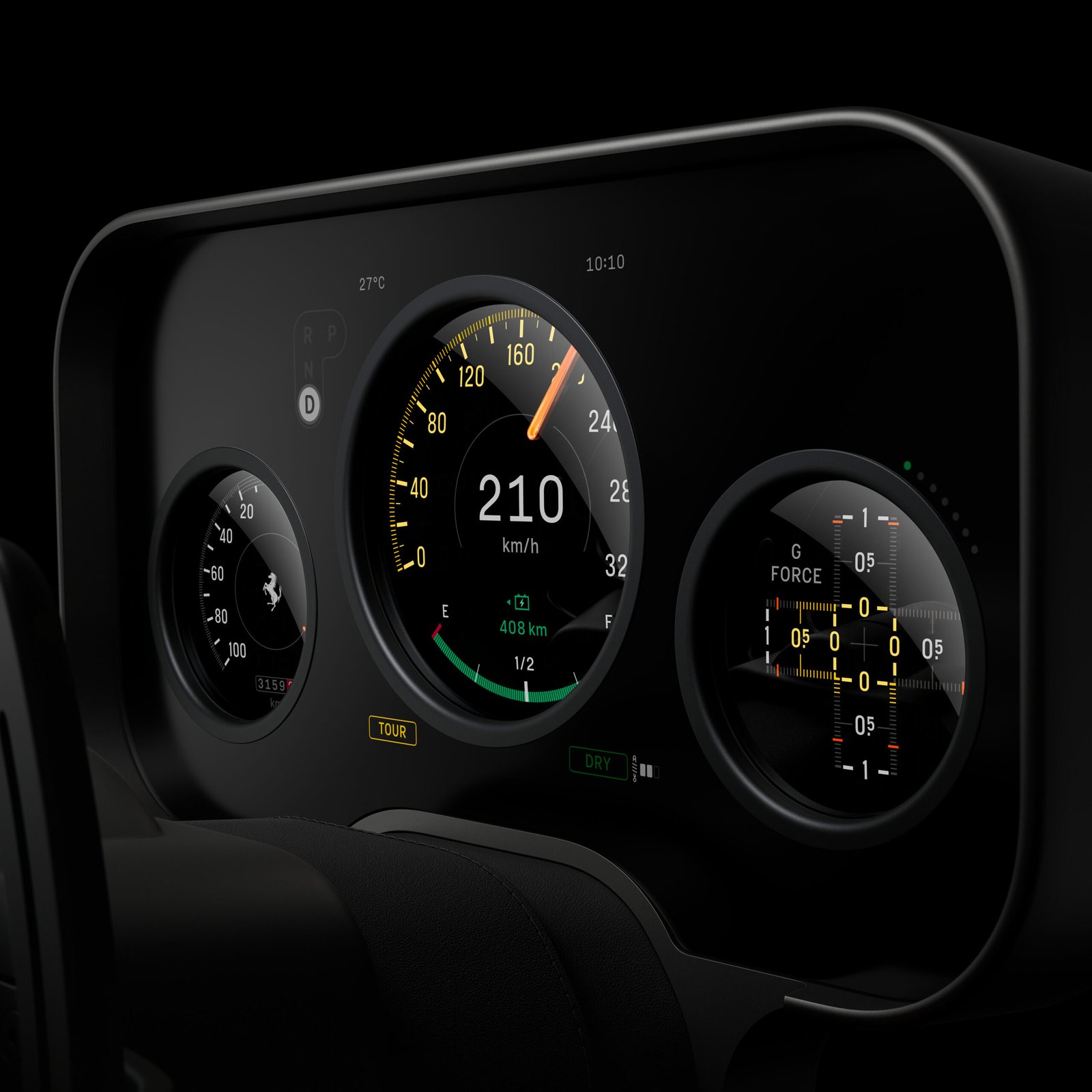
The Luce features three primary displays, the driver binnacle, the central control panel and a rear control panel. Each has been designed to reduce cognitive load, presenting information with clarity and immediacy. The binnacle, a first for Ferrari, is mounted on the steering column and moves with the wheel. It houses two overlapping OLED displays developed in collaboration with Samsung Display, featuring a world-first design with three precision cut-outs that reveal information from a secondary display beneath. Anodised aluminium rings and glass lenses complete the effect, adding depth and dimensionality without distraction.