
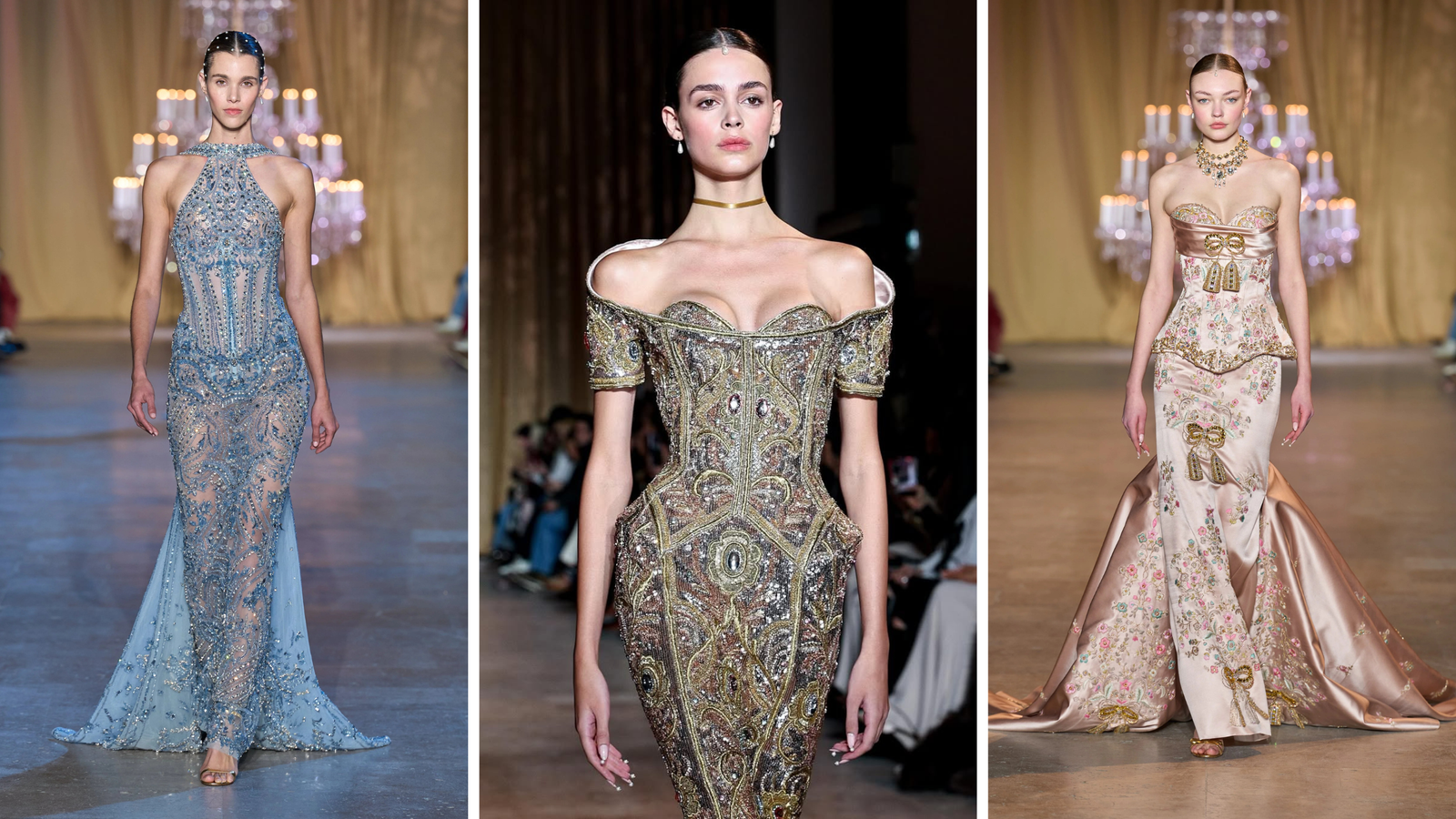
On Parisian soil, Elie Saab, Rami Kadi, Ashi Studio, Zuhair Murad and Georges Hobeika presented collections that spoke the global language of haute craftsmanship, precision, and presence.
Elie Saab Haute Couture: La Nouvelle Cour
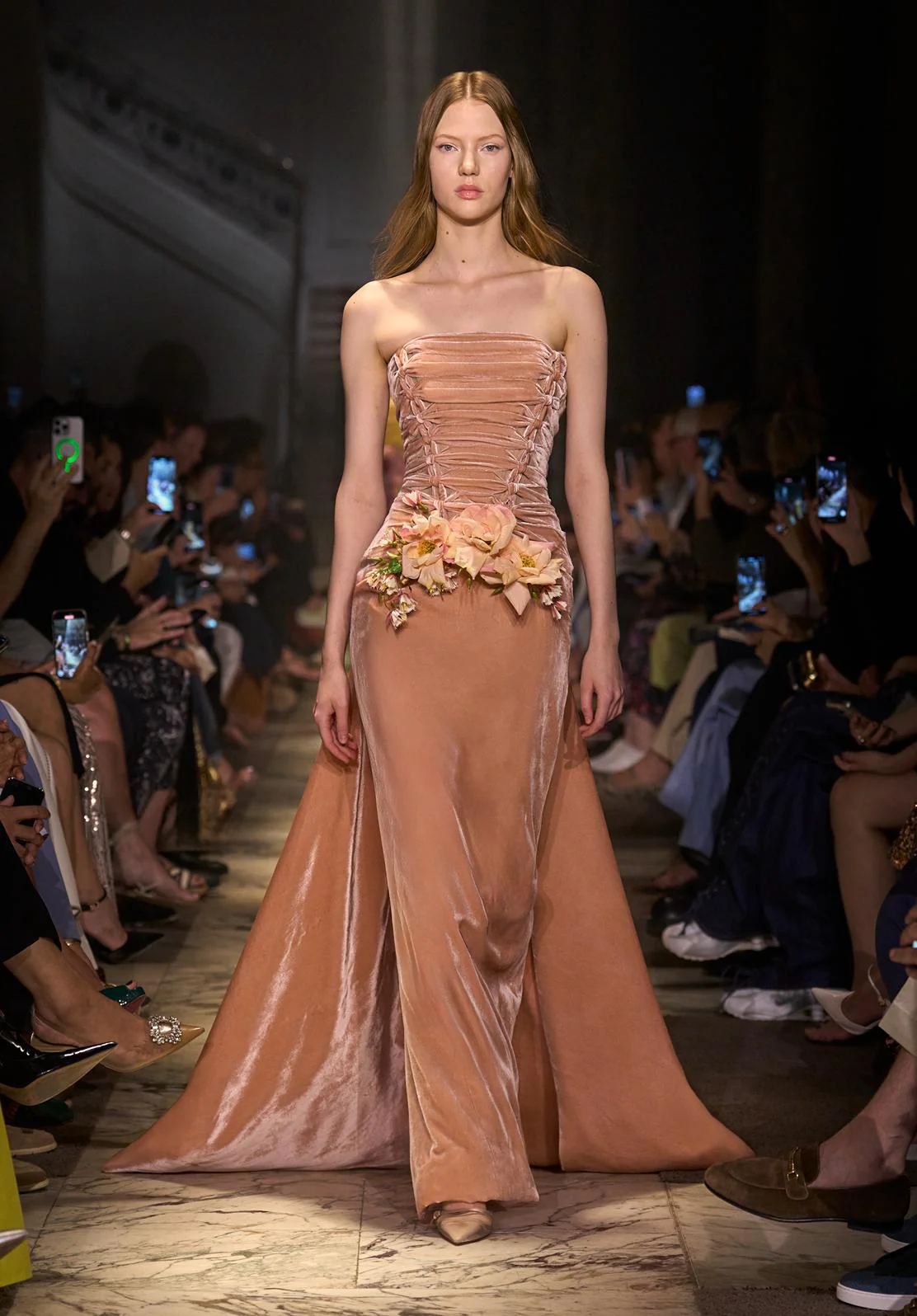
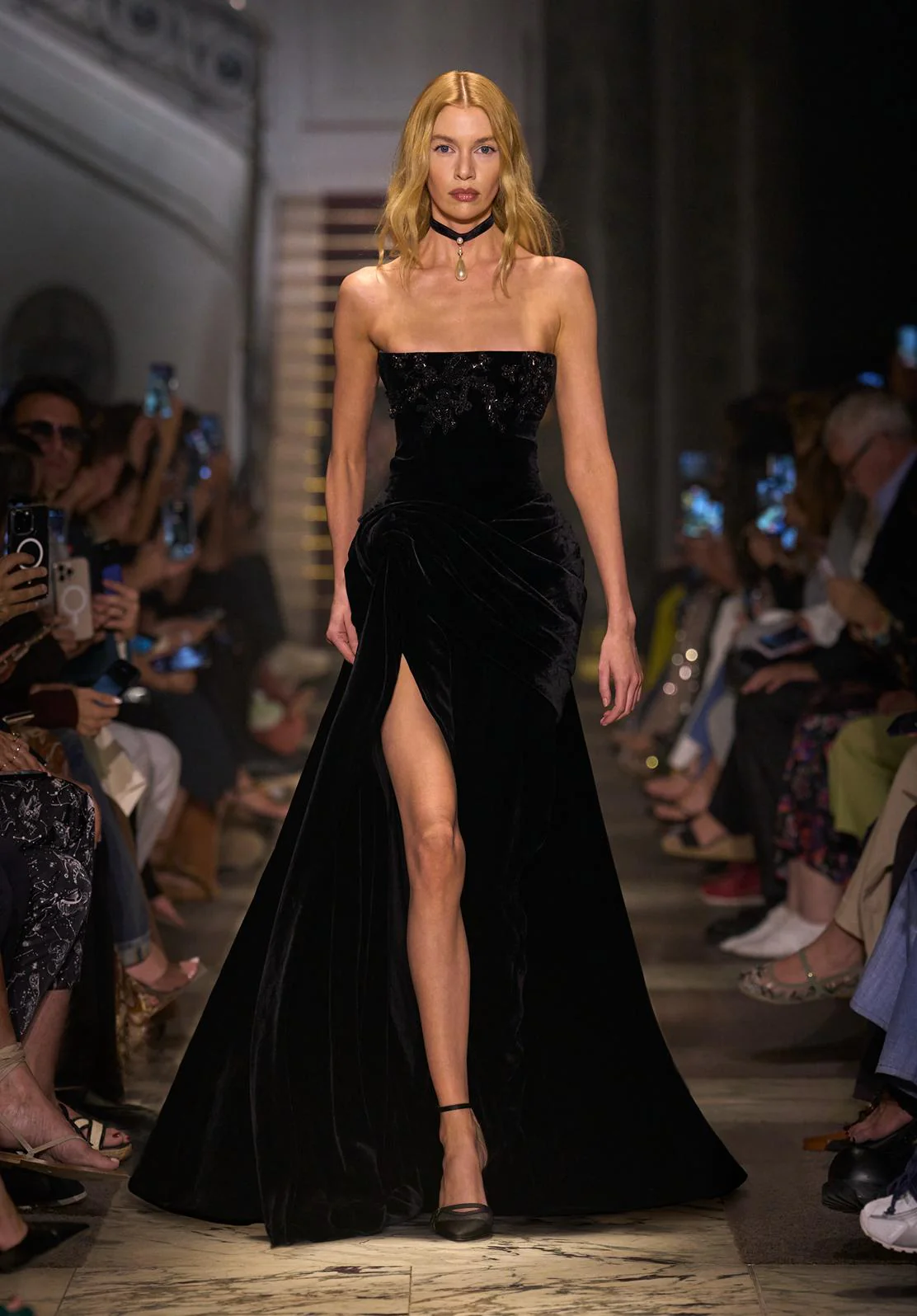
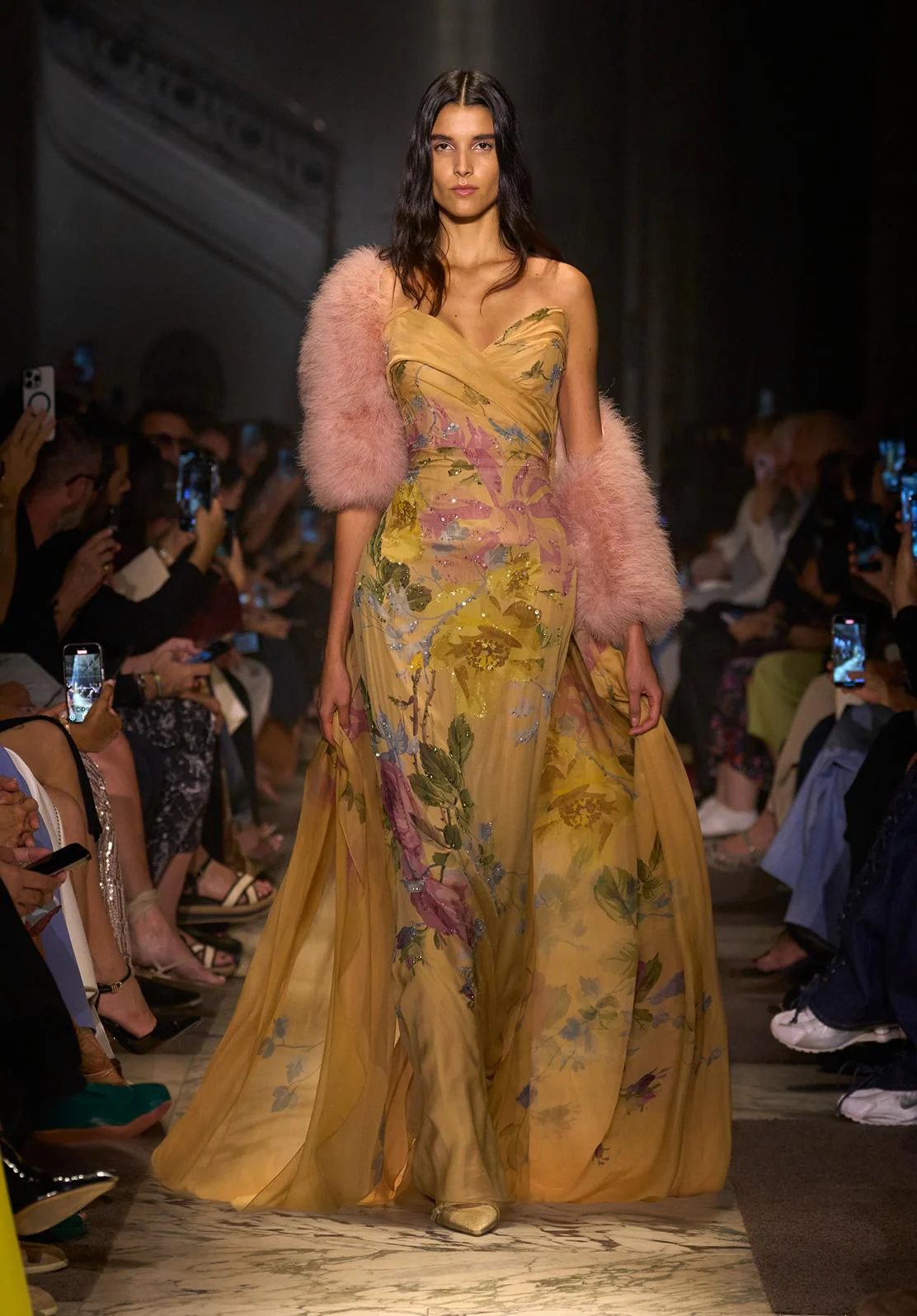
A study in dark romance, where velvet, chokers, and ceremonial headpieces shaped a new couture imagery. La Nouvelle Cour felt less like a spectacle and more like a mood slowly unfolding. The opening looks set the tone with strapless black velvet gowns, cut close to the body and finished with high slits that revealed movement with restraint. The velvet absorbed light, giving the silhouettes a quiet intensity without needing embellishment. Long trains followed the models like shadows, slim velvet chokers framed the neck, and drama appeared above the shoulders. Feathered headpieces rose delicately from the hair, curving upward like modern crowns adding height and symbolism, turning each model into a figure of quiet authority. The effect was regal but controlled, theatrical without becoming costume. Contrast came through in softer tones. Blush velvet gowns and sheer dresses adorned with floral appliqué introduced a gentler romance. Sculpted bodices held the structure firm, while the floral detailing softened the mood, allowing femininity to surface without breaking the collection’s discipline.
Georges Hobeika Couture: L’Amour
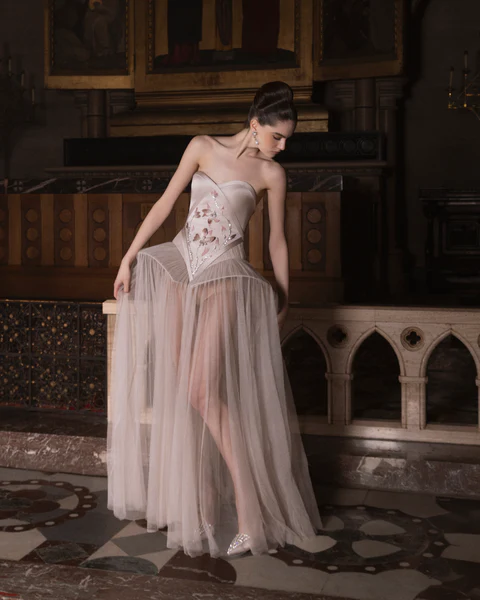
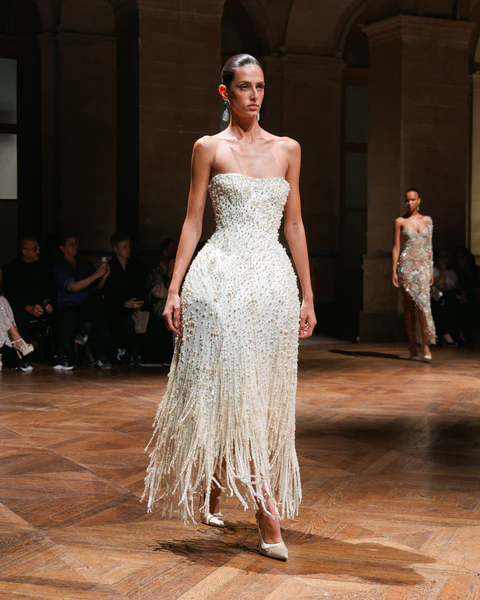
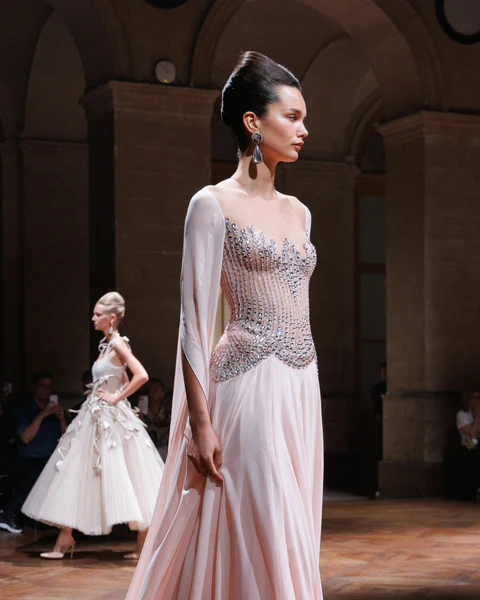
At Couture Week 2026, Georges Hobeika transformed the runway into a quiet meditation on love, vulnerability, and grace. L’Amour unfolded like a quiet dialogue between the self and the other, between fragility and strength, between what is held inside and what is finally offered to the world. Set against a sacred, almost devotional backdrop, the collection asked what it means to love not dramatically, but truthfully. The clothes followed this emotional logic: silhouettes that reveal without insisting, constructions that support rather than constrain, and embellishment that feels purposeful, almost meditative. Fabric choice played a central role in shaping the collection’s restraint. Layers of tulle, chiffon, and fine mesh were used to soften structure, allowing garments to hold form without appearing rigid. Nude and blush bases created depth through transparency, while embroidery and beadwork were integrated into the fabric itself rather than applied as surface decoration.
Sculptural elements appeared with intention, particularly through molded hems, corseted bodices, and controlled volume at the skirt. Some gowns expanded outward at the lower half, using architectural folds and curved seams to create dimension without weight. Fringe and elongated beading introduced movement while preserving balance, ensuring that each dress responded to motion rather than overpowering it. The craftsmanship remained precise and understated, reinforcing a vision of couture grounded in form, material, and quiet technical mastery.
Ashi Studio: Couture as Excavation
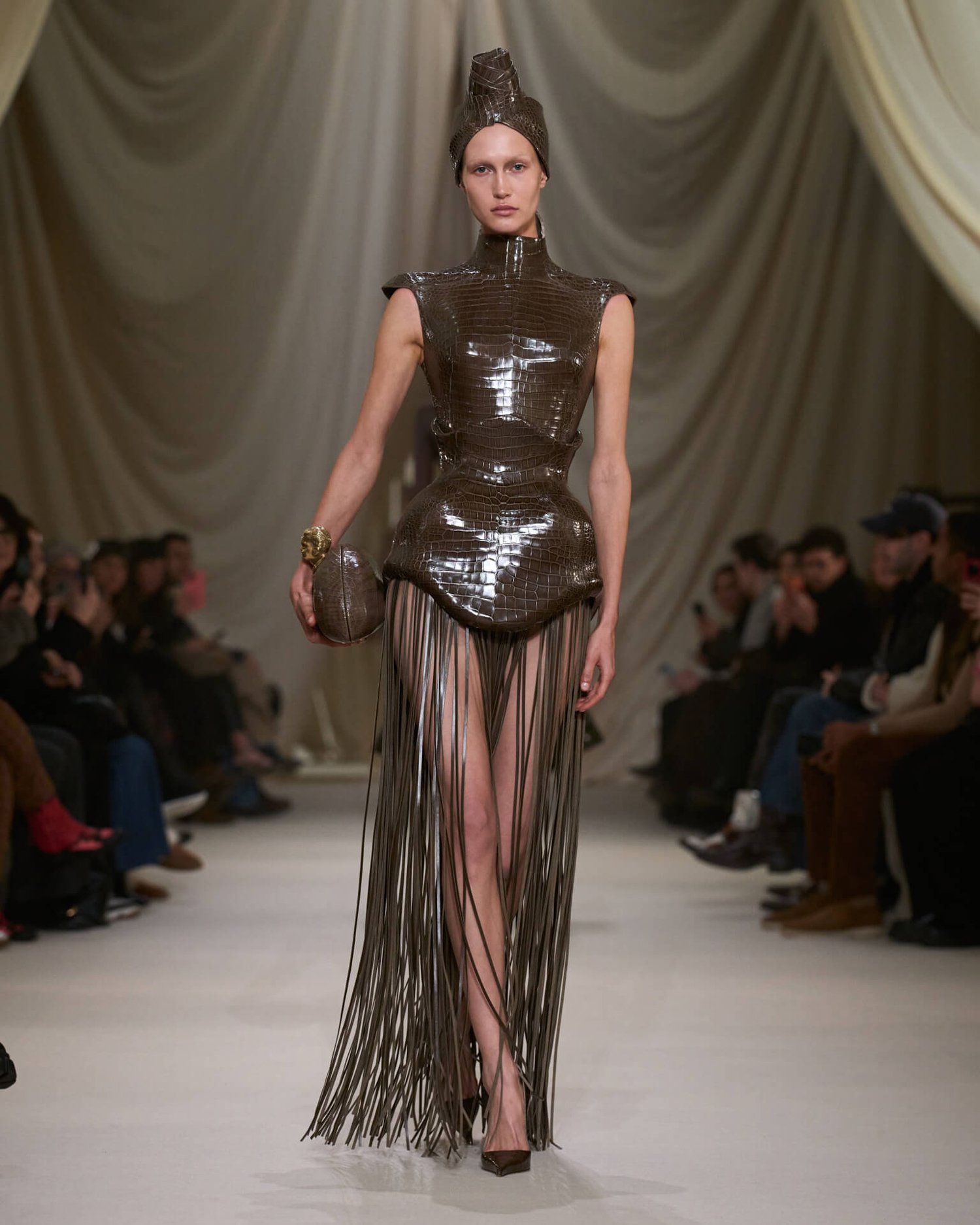
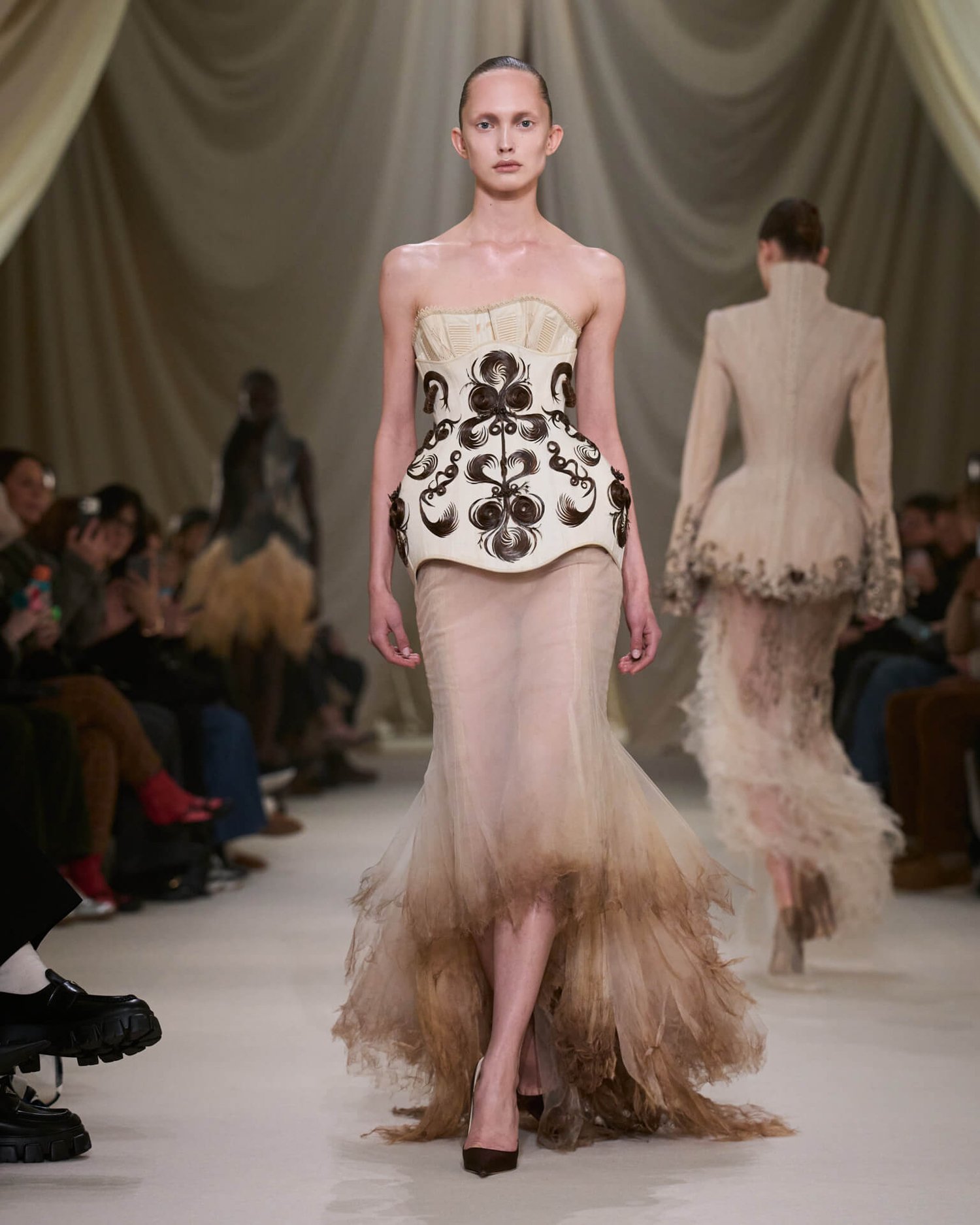
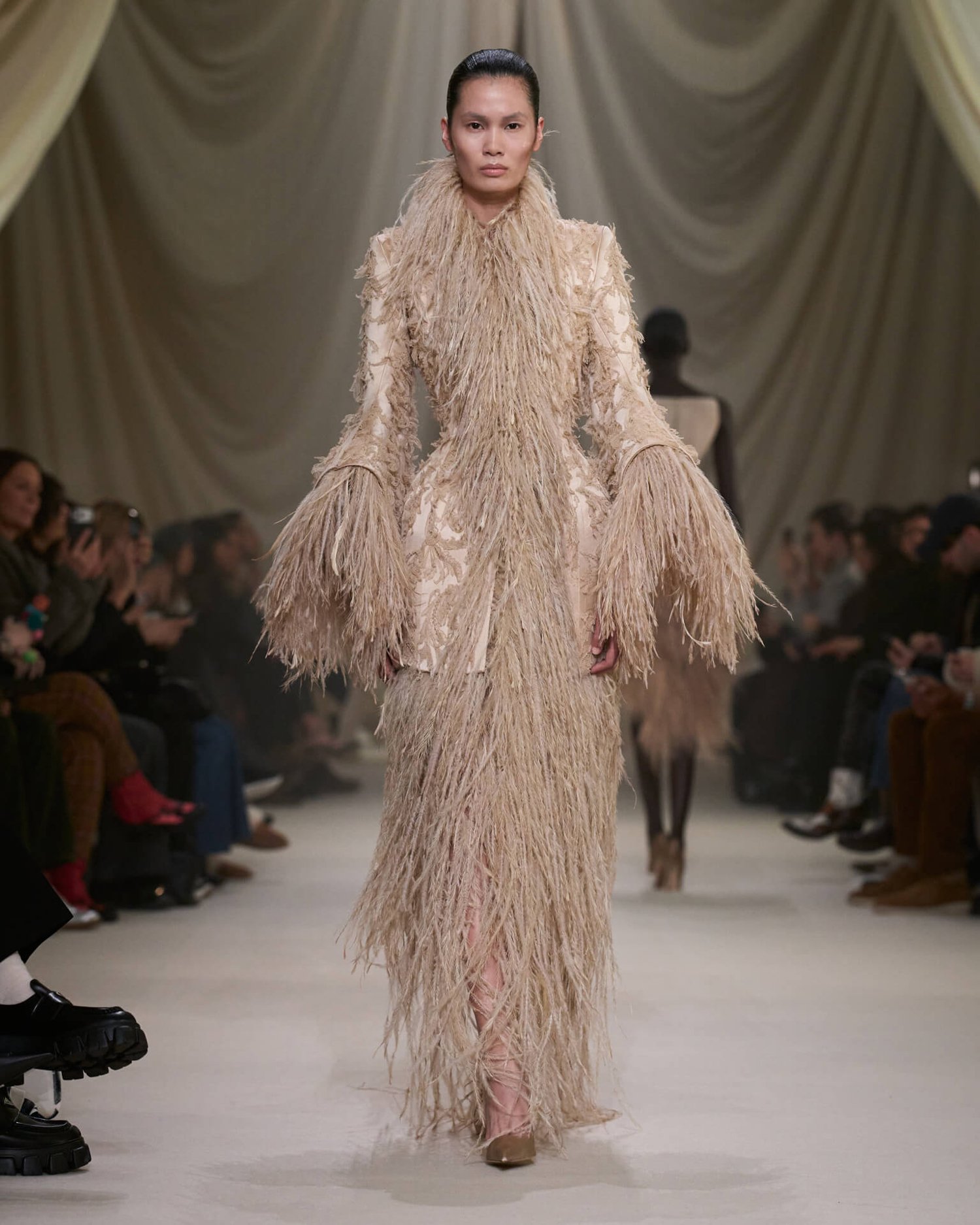
Founded in Saudi Arabia by Mohammed Ashi, Ashi Studio approached the couture season as an act of uncovering rather than presentation. The collection read like a layered archive, fragments of old Paris, traces of ancient cultures, and references to art and material memory brought into dialogue with the present. Fabrics carried weight and texture, surfaces appeared deliberately imperfect, and silhouettes moved between rigidity and collapse. Leather emerged as a defining element on the runway molded, polished, and sculpted directly onto the body. High-shine crocodile-textured leather dresses were cut with sharp shoulders, exaggerated lapels, and elongated lines, creating an armor-like effect that felt deliberate rather than decorative. These pieces introduced tension into the collection: rigid surfaces meeting strength framed through precision tailoring and controlled severity. Elsewhere, the collection softened without losing its edge. Sculpted gowns in mesh, tulle, and heavily worked fabrics played with transparency, fringe, and weight, moving between fragility and structure. Beaded hems, feathered surfaces, and corseted waists gave the dresses a theatrical quality, amplified by the way they responded to motion on the runway.
Rami Kadi: Couture in Motion
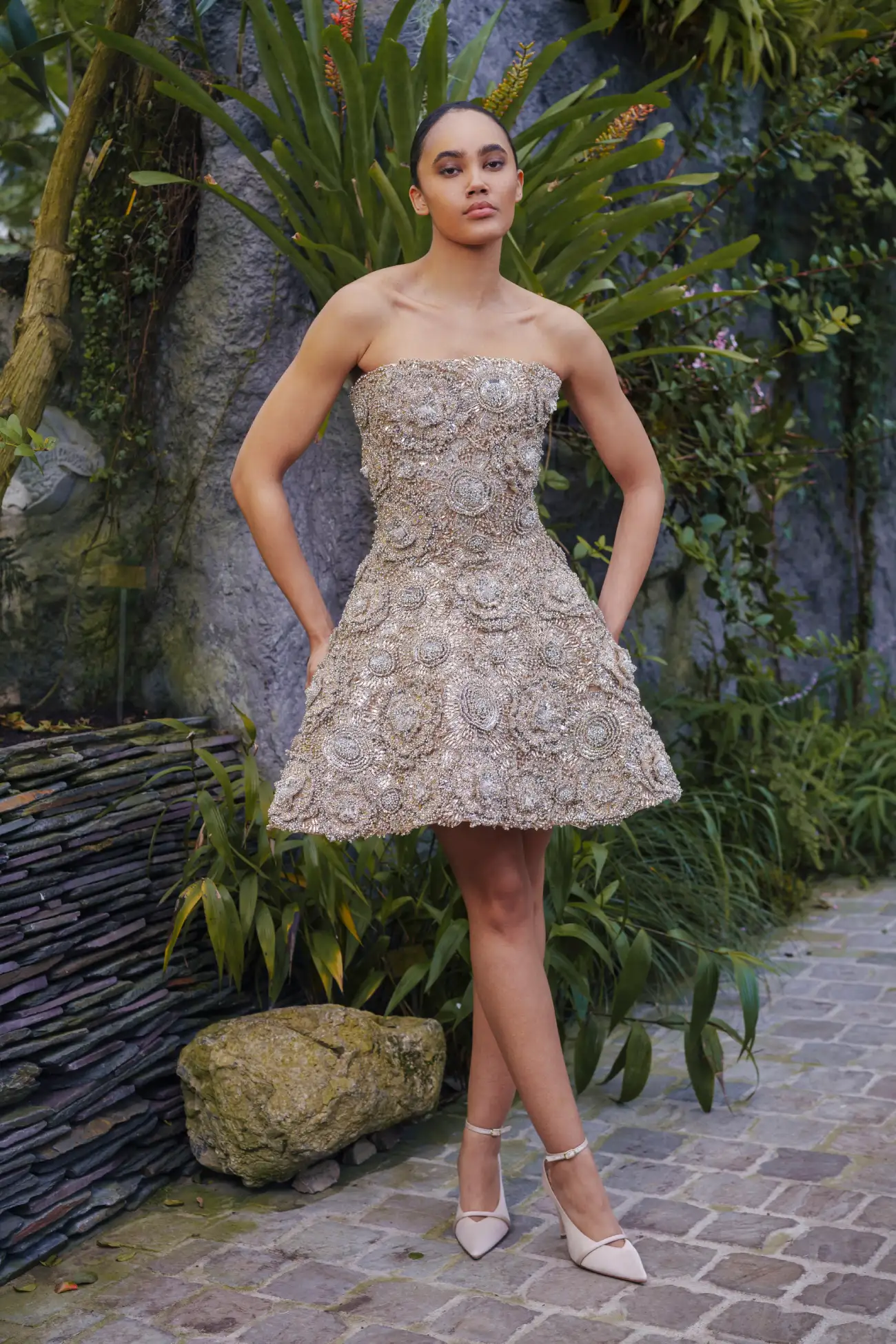
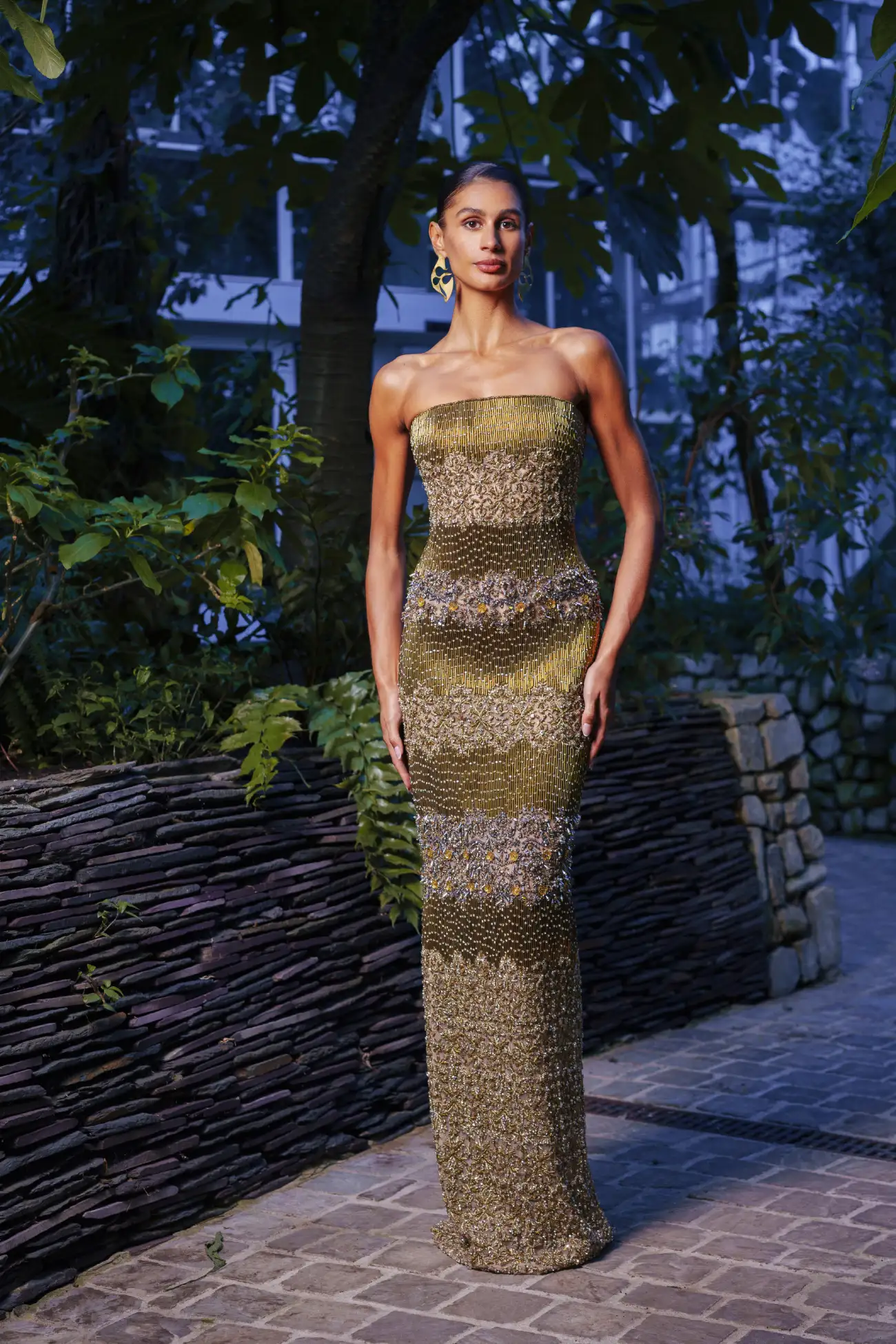
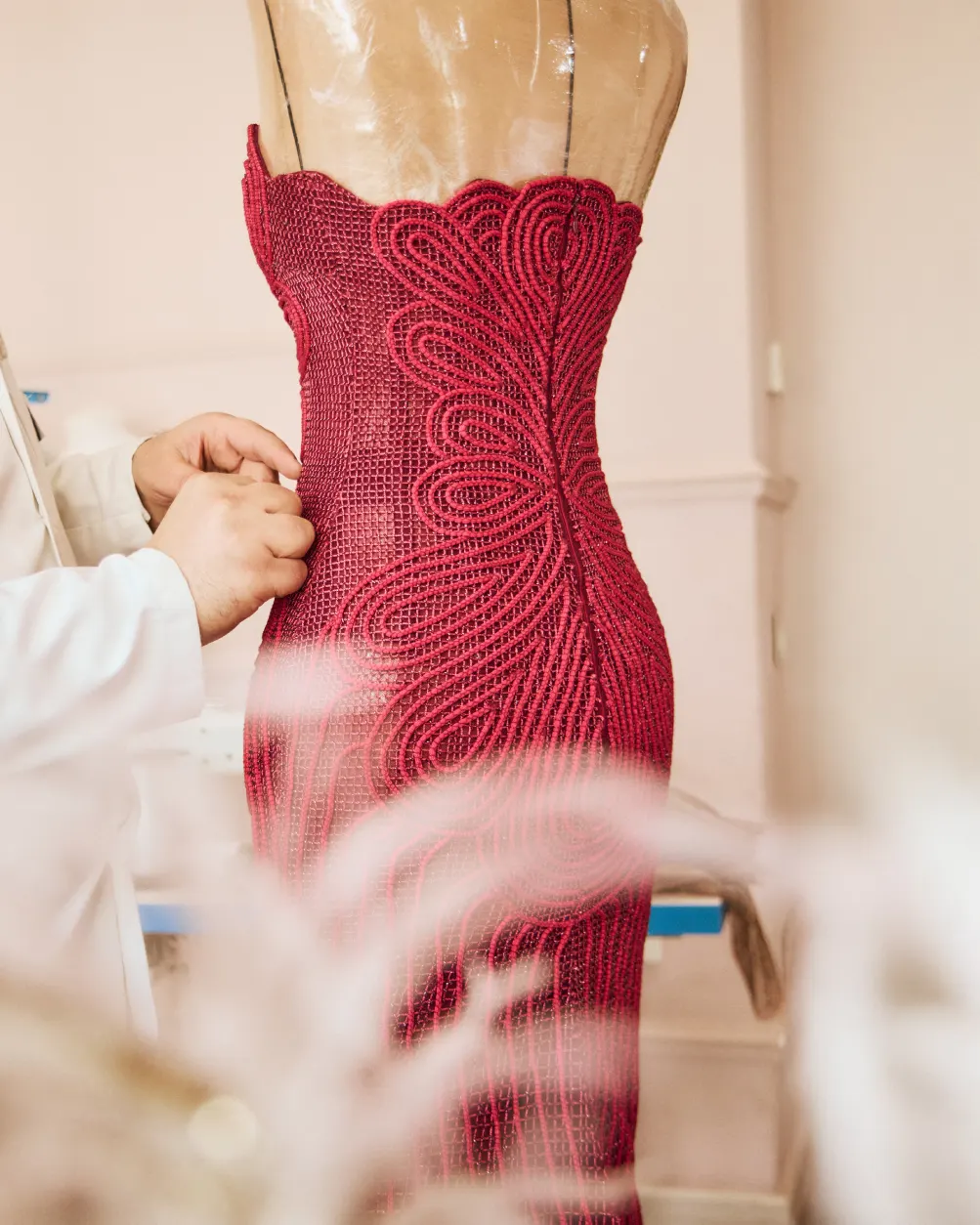
With Elementa, Rami Kadi approached Spring/Summer 2026 couture as a study of transformation. Drawing from the elemental forces of nature, the collection unfolded through contrast: structure against fluidity, restraint against intensity, stillness against movement. Across the silhouettes, embroidery functioned less as ornament and more as composition, with surfaces built like abstract artworks layered directly onto the body. Sequins, beads, crystals, metallic threads, silk, and raffia were assembled into framed panels and rhythmic patterns, allowing each look to shift as it moved. Fringe is used not for drama, but for cadence, falling in measured rows that respond to movement rather than overpower it. Gold and deep red tones appear layered rather than saturated, built up through thousands of small elements that catch light unevenly, creating depth instead of shine. Even the most ornate looks remain controlled, their impact coming from accumulation rather than excess. This is couture that feels calibrated and exacting less about fantasy, more about how far embellishment can be pushed before it becomes structure itself.
Zuhair Murad: Chiaroscuro
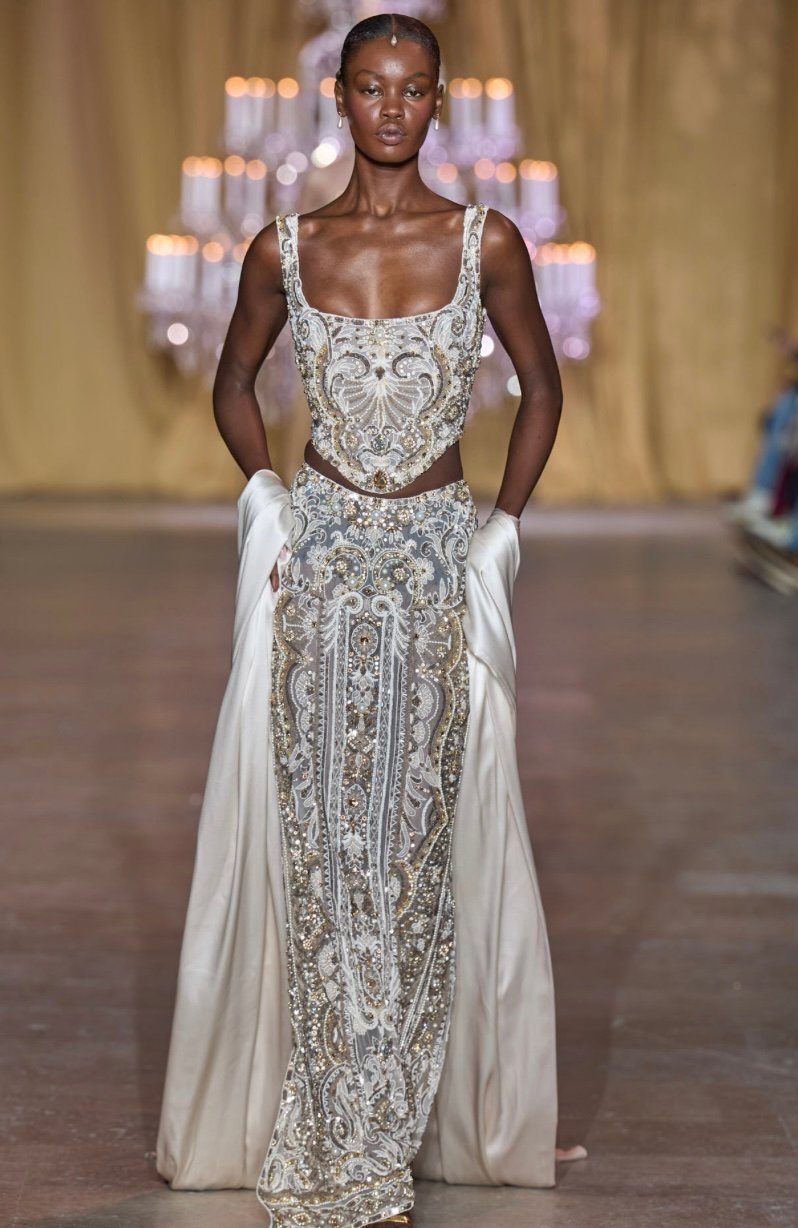
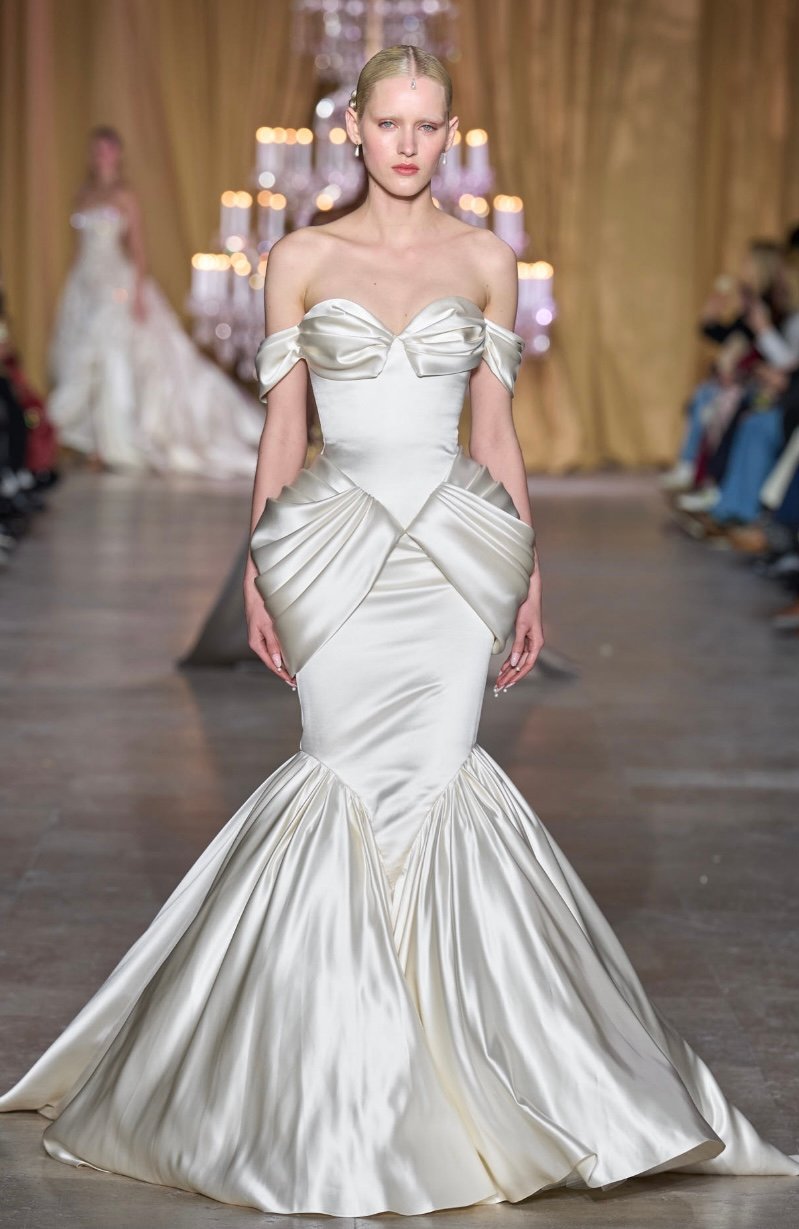
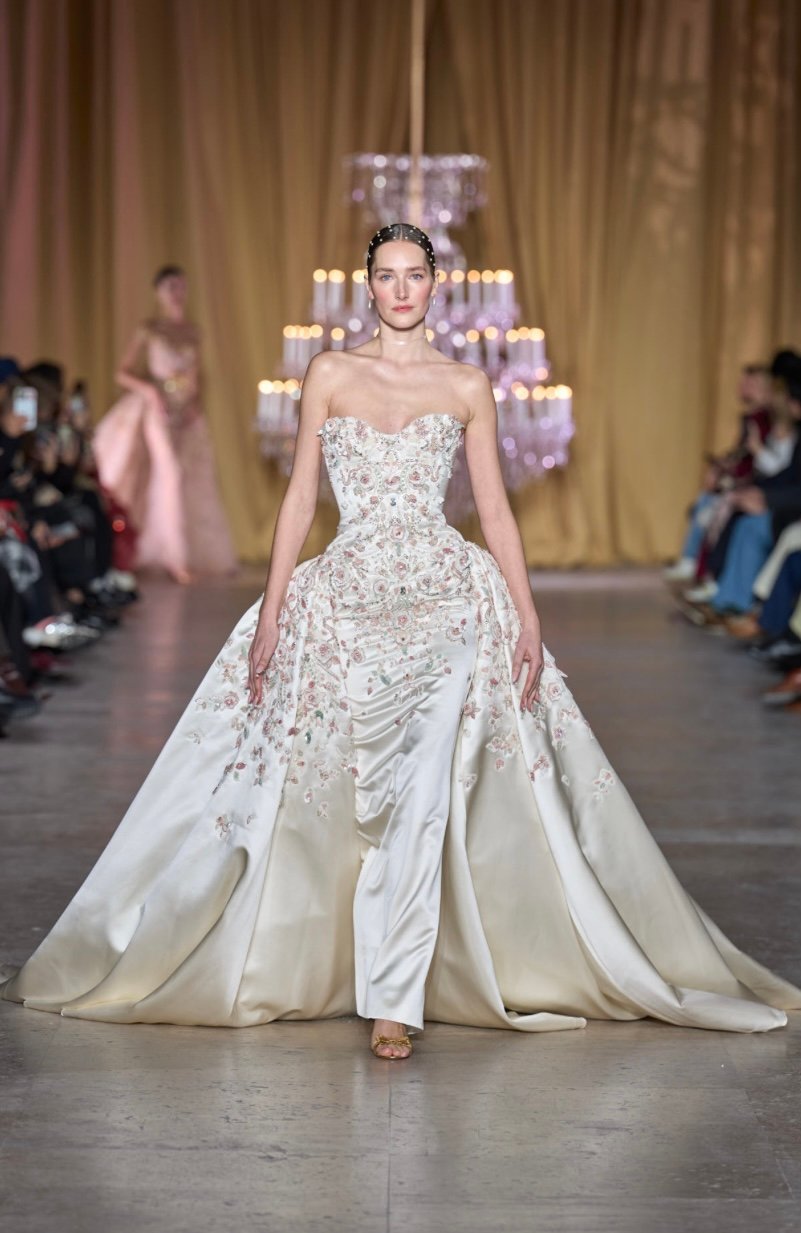
For Spring–Summer 2026, Zuhair Murad turns to chiaroscuro as both technique and a dialogue between shadow and radiance. The collection unfolds like a quiet renaissance, where couture becomes an act of repair rather than spectacle. Sculpted silhouettes emerge slowly, carried by time-honored savoir-faire, as if stepping out of darkness toward renewal. Here, femininity is sovereign and contemplative, draped in light, protected by fabric, and grounded in the belief that beauty, when handled with restraint and intention, can still heal what the world has fractured. Draped satins, sculpted mermaid lines, and crystal-etched bodices suggest ceremony without sentimentality. Rather than romanticizing fragility, Murad presents bridalwear as something grounded and assured garments that feel protective, almost architectural, carrying weight, intention, and permanence as the wearer steps forward.