
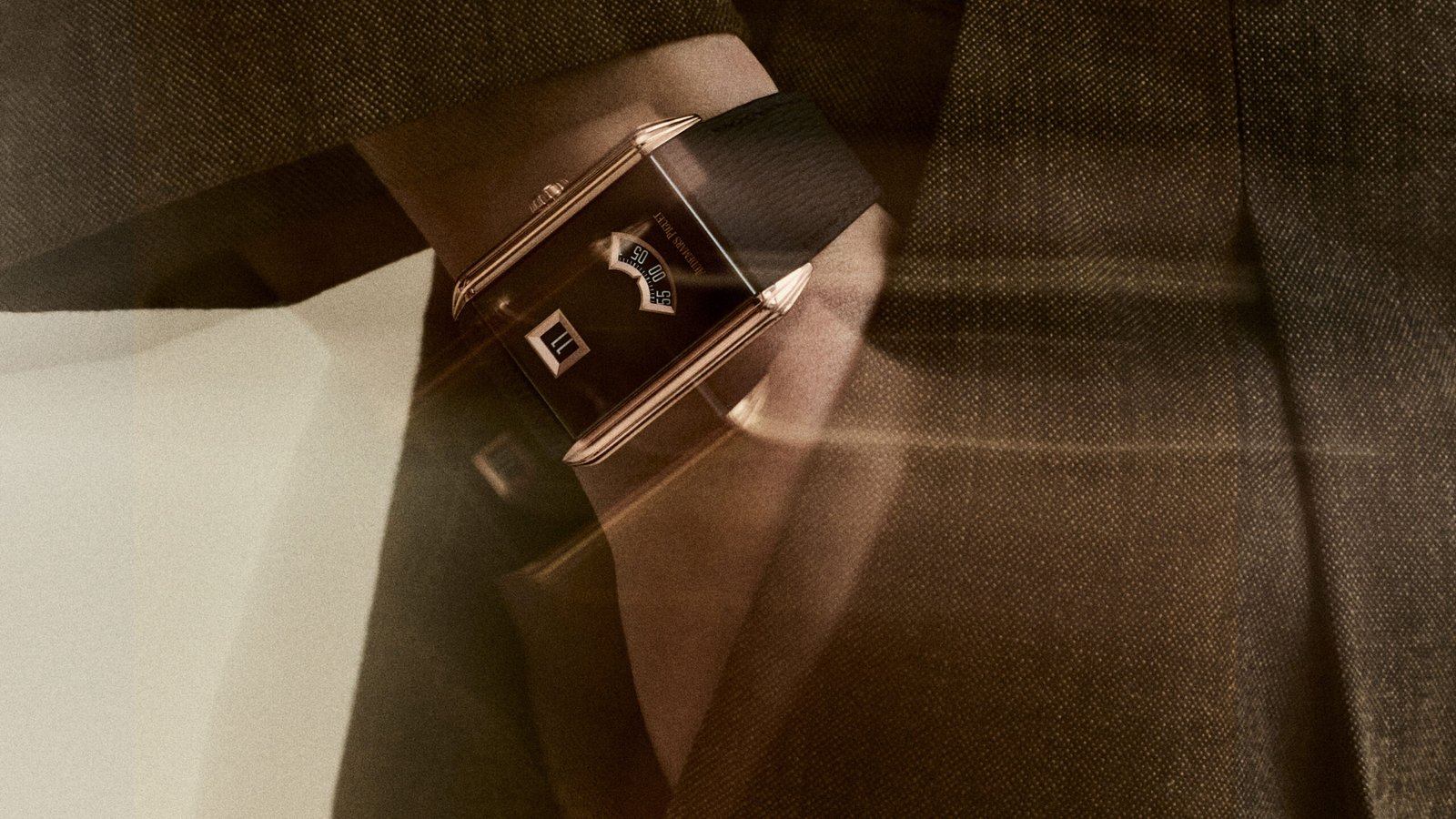
The most forward-looking watches are often those that understand when to pause, look back, and move deliberately. Within Audemars Piguet’s roster of 2026 novelties, its Neo Frame Jumping Hour is a contender for the most coveted timepiece of the year ahead, offering a reminder that progress in horology is not always about acceleration, but about precision, restraint, and continuity. The new jumping hour model is a nod to the brand’s pioneering role in developing the first jumping hour watches in the 1920s. It draws inspiration from a 1929 rectangular jumping hour wristwatch, pre-model 1271, created at the twilight of the Roaring Twenties. It was a moment suspended between optimism and collapse, when design was imbued with speed, fluidity, and faith in the future. That spirit, rooted in the Streamline Moderne movement, finds a contemporary echo in the Neo Frame.
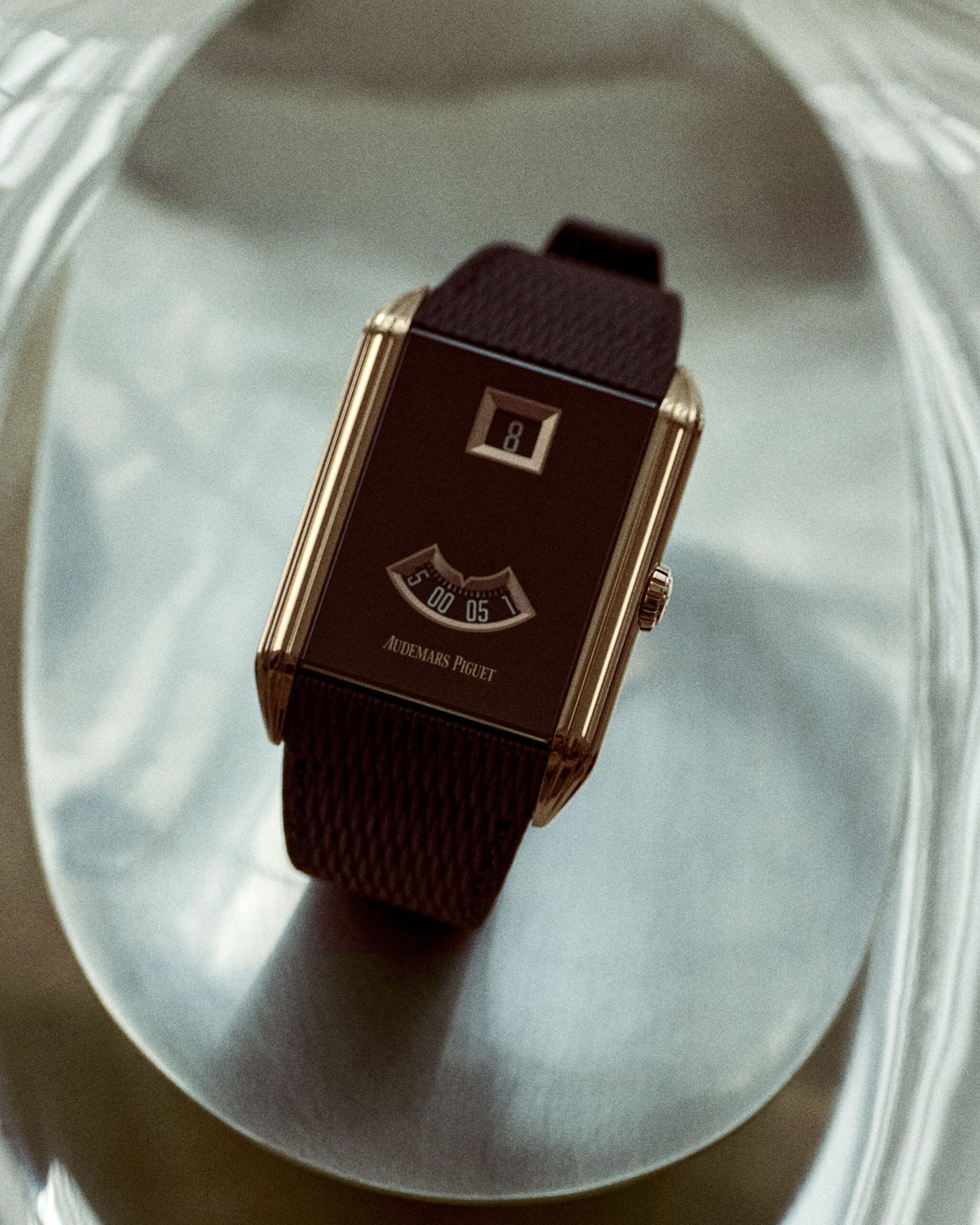
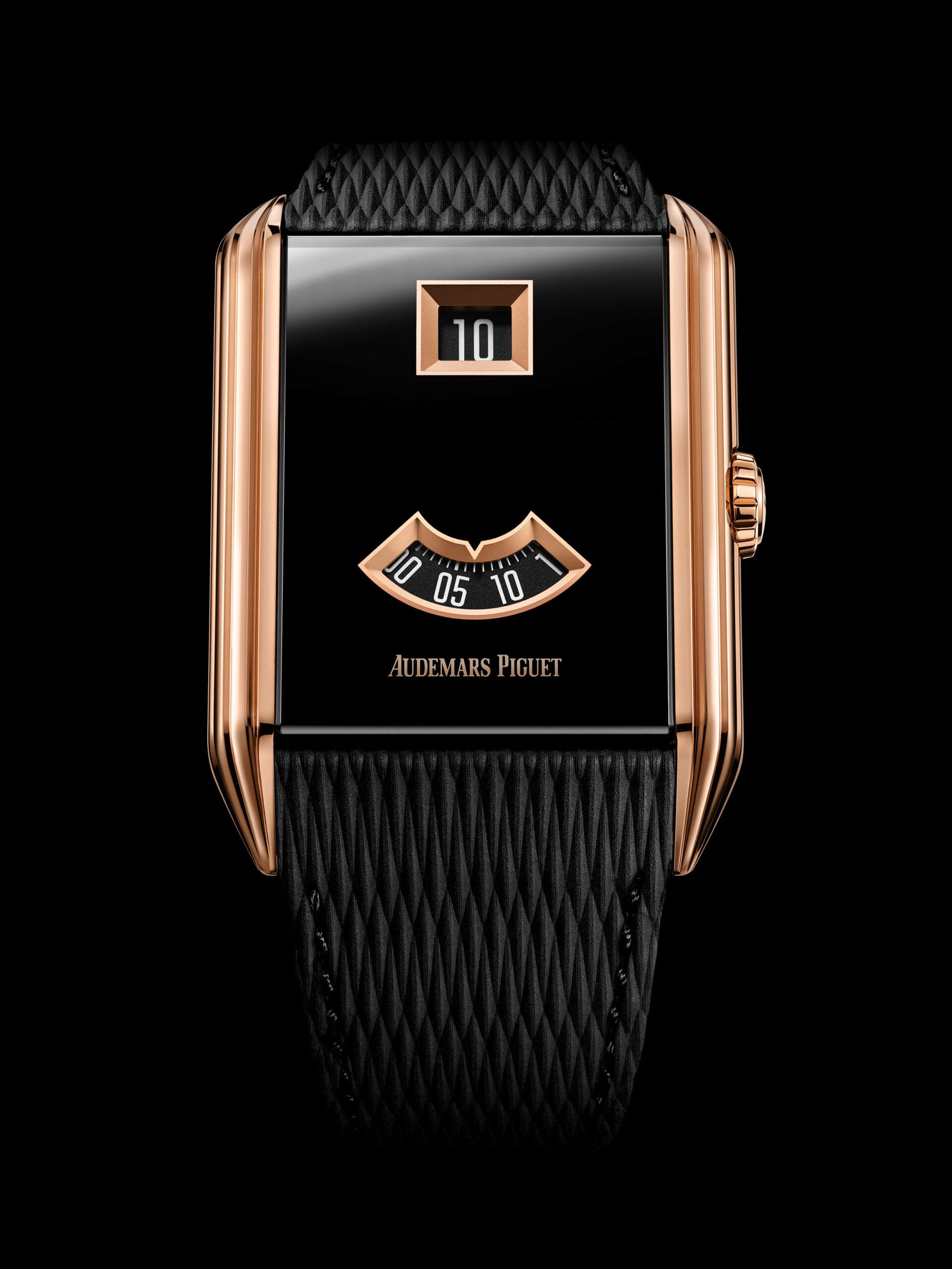
The 18-carat pink gold case is sculptural and assured. Vertical gadroons, eight on each side, run down the flanks like architectural ribs, narrowing into sharply tapered lugs. The effect is dynamic yet disciplined, a case that feels in motion even at rest. It is geometry with intent, elegance without excess. The dial dispenses with convention almost entirely. Instead of metal, Audemars Piguet employs a black PVD-treated sapphire crystal, pierced by two gold-framed apertures: one for the jumping hour, the other for the trailing minutes. The absence of traditional framing at 12 and 6 o’clock introduces both aesthetic risk and technical challenge. Sapphire, by nature, resists compromise. Water resistance, meanwhile, demands precision engineering rather than visual persuasion.
The solution is characteristically Audemars Piguet. The sapphire crystal is bonded directly to the dial plate and secured to the case using a bespoke construction developed exclusively for this model. The result is a water resistance of 20 metres, which is modest by sports-watch standards, but remarkable given the purity of the design. It is a reminder that minimalism, when executed properly, is among the most complex disciplines in watchmaking.
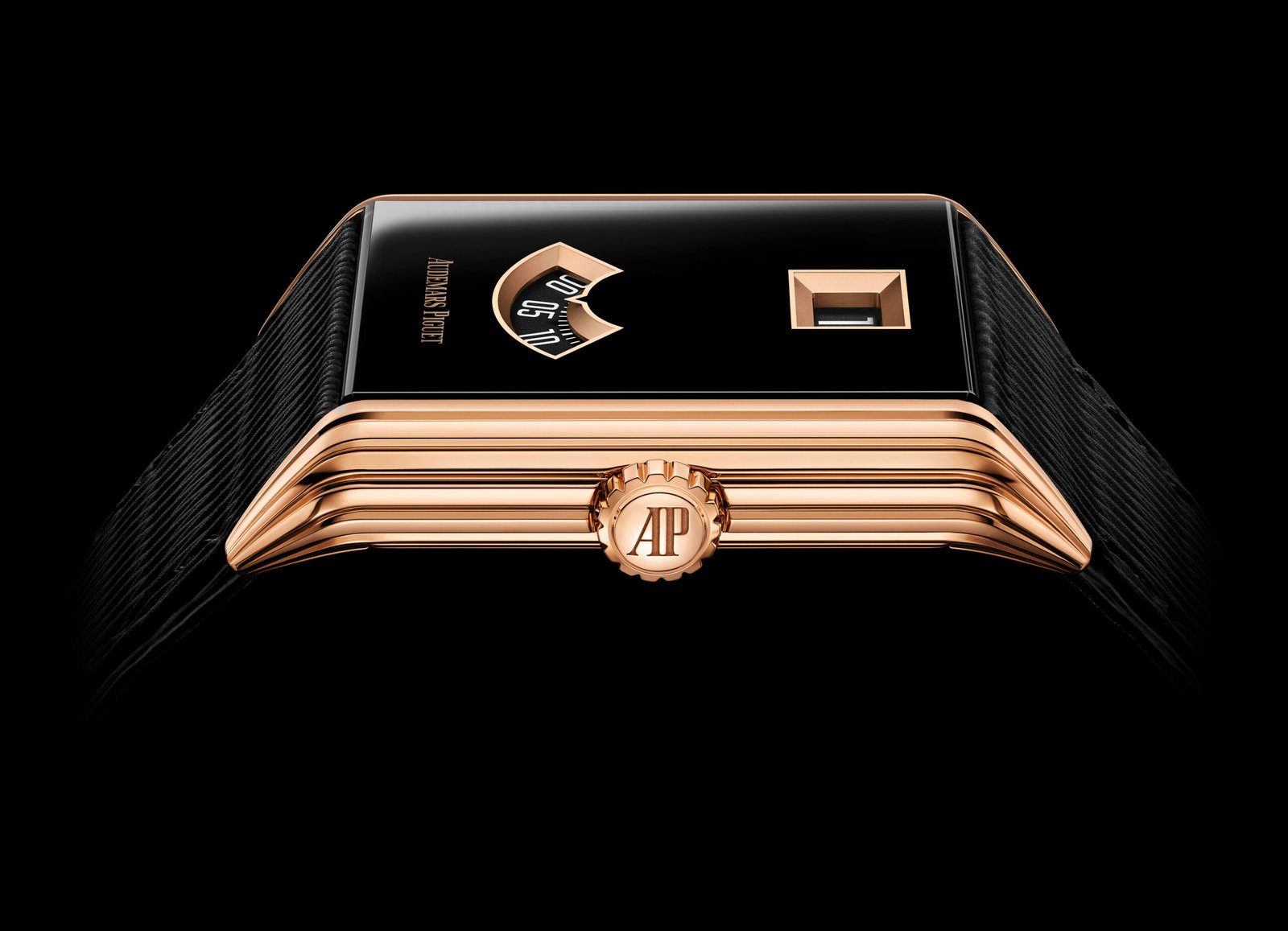
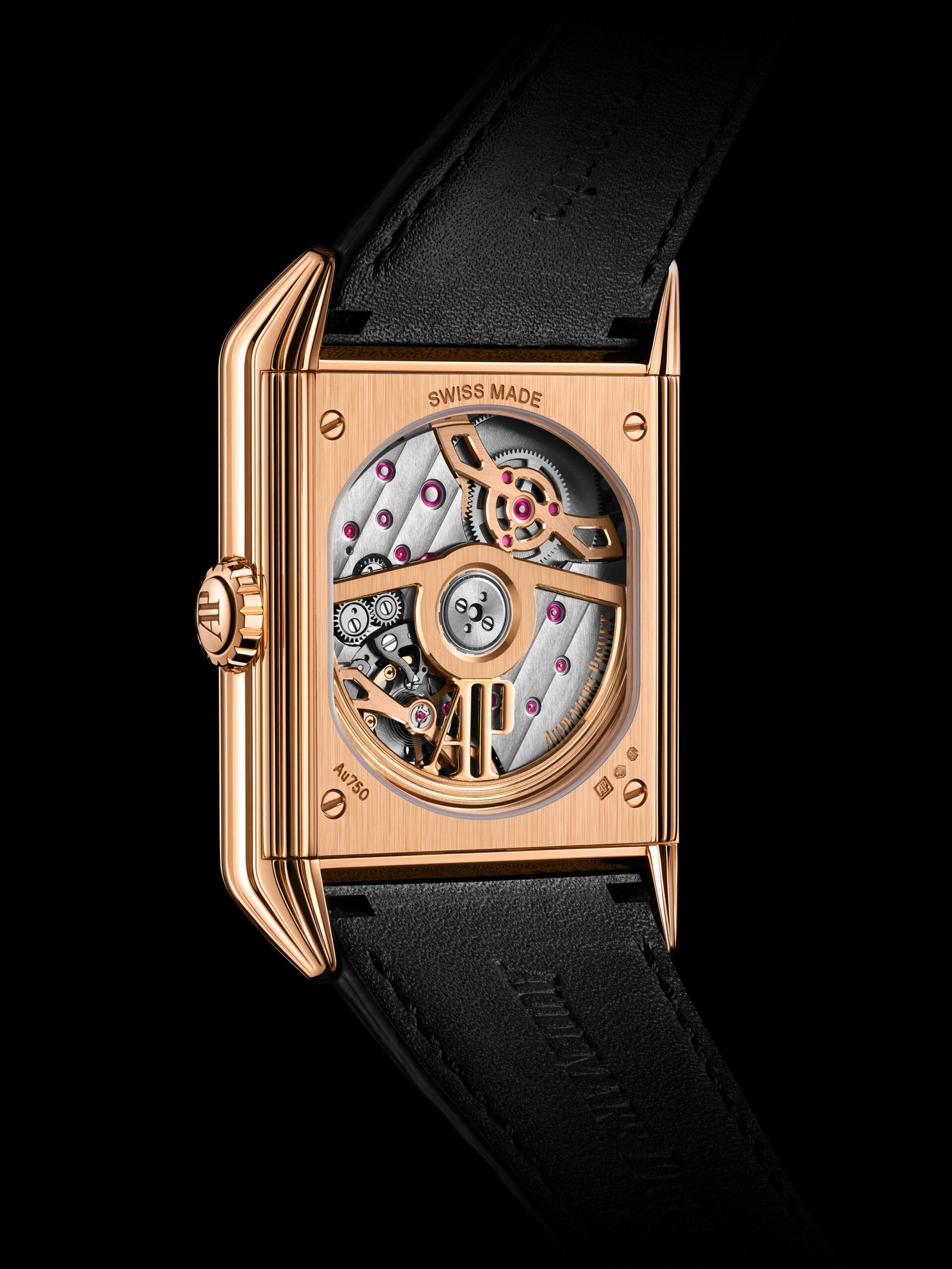
At the heart of the Neo Frame beats Calibre 7122, the manufacture’s first self-winding jumping hour movement. Beyond its 52-hour power reserve, the calibre incorporates a patented shock-absorbing system designed to prevent accidental hour jumps caused by impact. Originating in 17th-century night clocks, they were developed for legibility in low light, later migrating to pocket watches and early wristwatches. Audemars Piguet was among the pioneers, producing 347 jumping hour wristwatches between 1924 and 1951, many featuring dual apertures similar to those seen here. After the Second World War, the complication faded, resurfaced briefly during the Space Age, and again in the 1990s, often paired with minute repeaters.
Today, in 2026, the jumping hour feels newly resonant as a counterpoint to the visual overload of contemporary timekeeping. It asks the wearer to slow down, to read time deliberately, to engage rather than glance. The Neo Frame Jumping Hour demonstrates innovation quietly, confidently, and with the assurance of a house that understands its own history as one of its most powerful tools.