
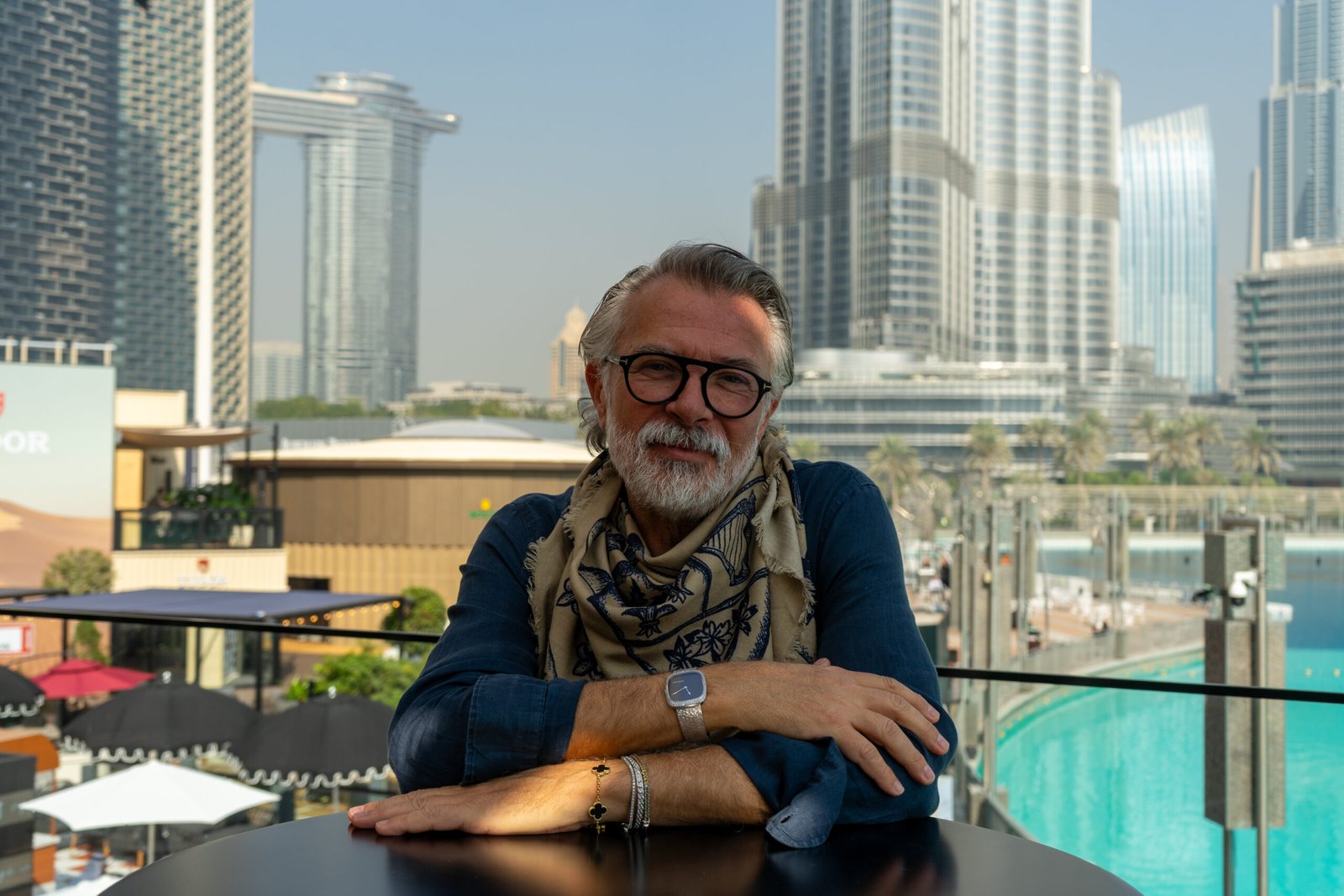
For more than three decades, Emmanuel Gueit has quietly shaped the visual language of modern watchmaking. His designs sit on some of the most recognisable wrists in the world, yet his name has long remained known primarily within industry circles. Sitting down with Eyes Arabia at Dubai Watch Week, Gueit recalls his watch legacy. From redefining sports luxury at Audemars Piguet to leaving his imprint on Rolex and Piaget, Gueit is responsible for some of the most consequential silhouettes of the last 30 years. And still, he insists, he’s only getting started.
Gueit’s earliest memories are inseparable from watchmaking. His father, a designer who began his career at Piaget before becoming a freelance creator in the 1970s, worked from home. “The first watch I remember was probably a jewellery watch that my father was designing,” Gueit recalls. “I was very young, watching him sketch. Even before that, I’d go with him to Piaget. So my early memories are Piaget, Piaget, Piaget.” It was, in many ways, an education by osmosis, watching ideas form on paper, learning that design was not an abstract profession but a lived craft.
School, by contrast, was not a natural habitat. “I was very bad at school,” Gueit says with disarming honesty. “I got fired from every school I went to.” While still young, Gueit instead chose to approach the head of design at Audemars Piguet with his drawings. “She told me the watch was nice, but she wasn’t interested in the design,” he remembers. “But she said, ‘I’m interested in you.’” An offer followed. At just 22 years old, Gueit found himself in an environment defined by tradition, hierarchy, and caution. It was here that he conceived the watch that would come to define his legacy: the Royal Oak Offshore.
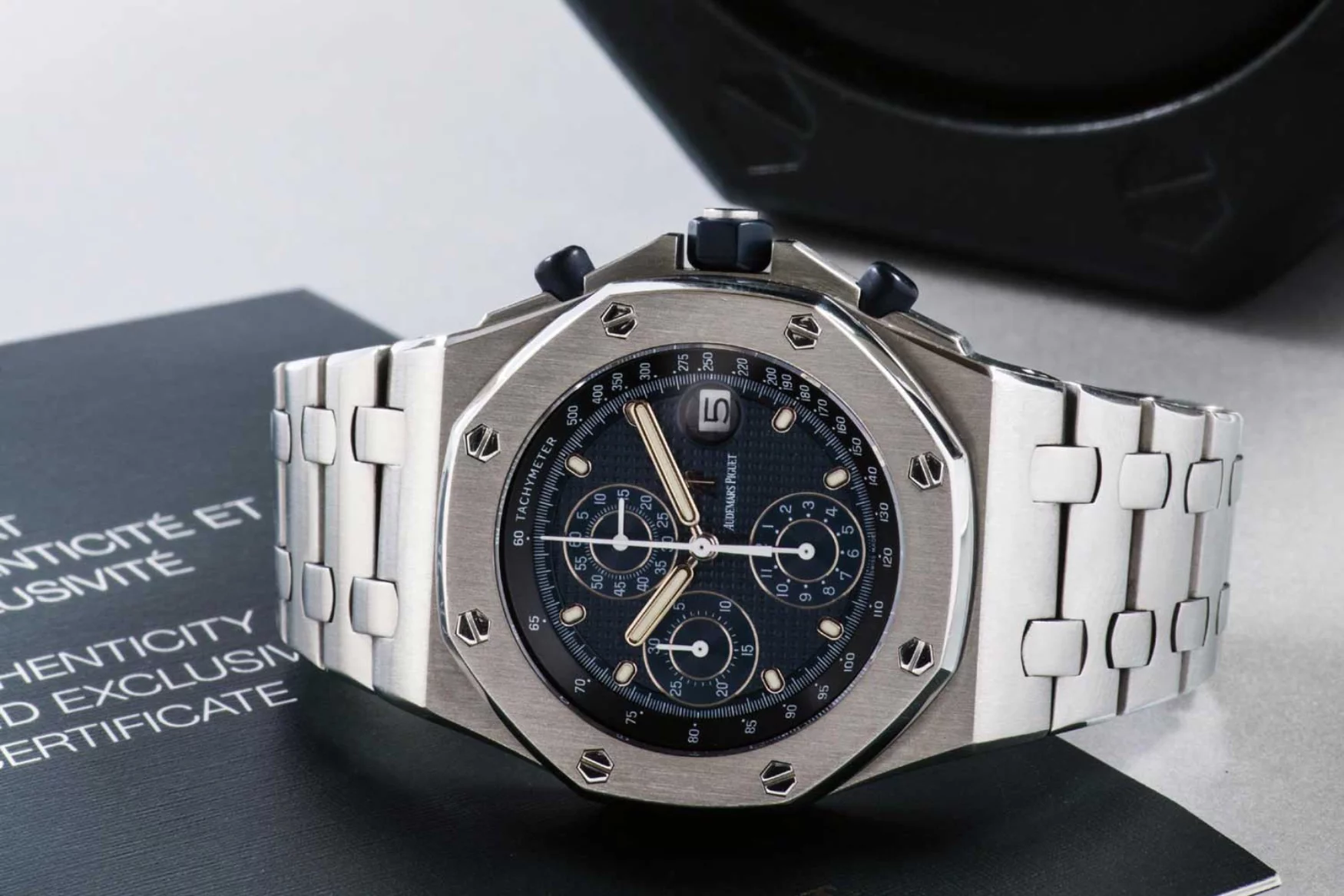
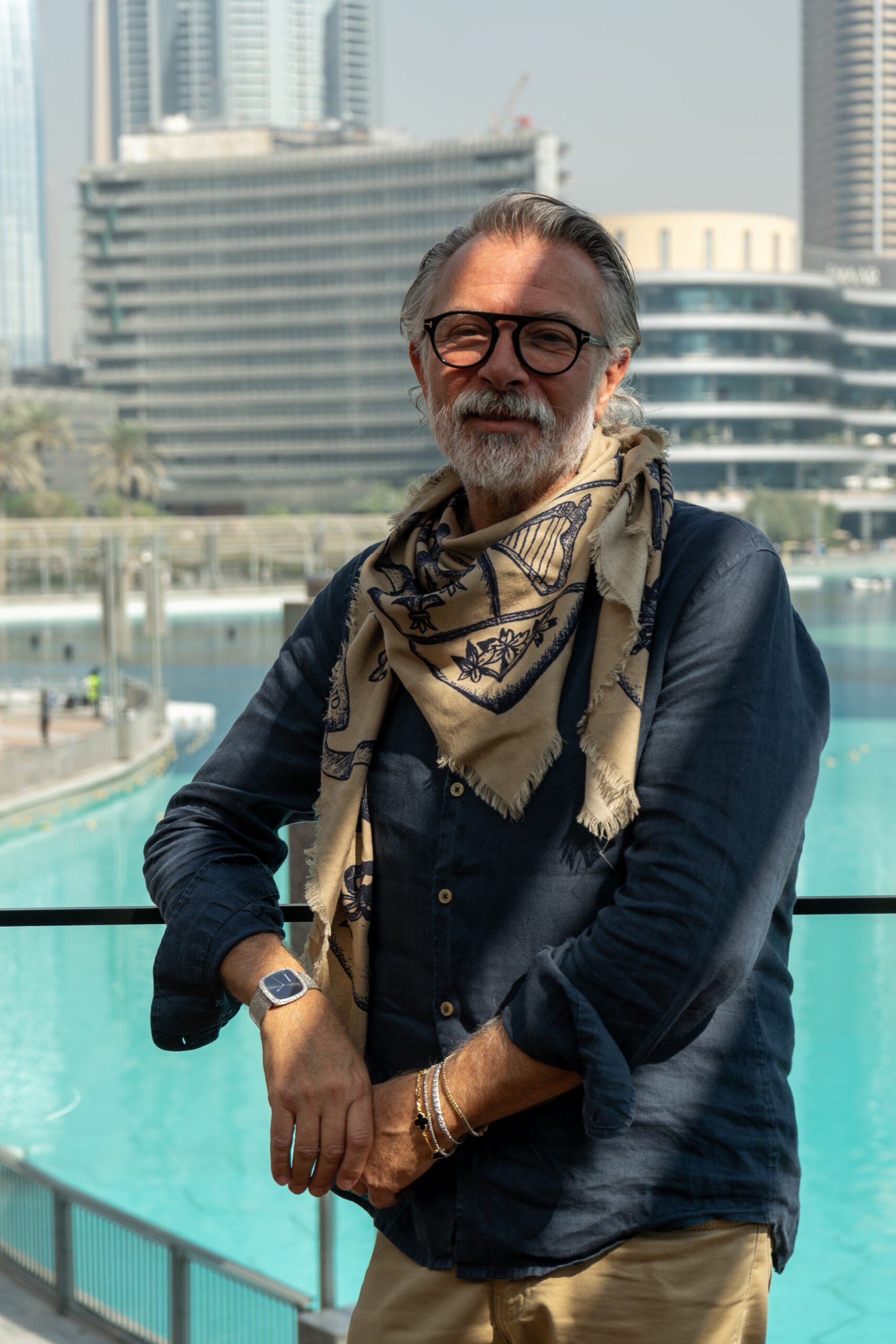
At the time, the design was radical, oversized, muscular, unapologetically aggressive. Internally, it was widely disliked. “I had this pain in my stomach,” he says. “A pain of excitement. I knew it was going to be a huge success. I was the only one who believed in it.” Only one other person shared that conviction was then-CEO Steve O’Connor. Against resistance, the Offshore was approved. Its impact would be seismic, transforming not only Audemars Piguet but the entire category of luxury sports watches. “I would never imagine it would become so huge,” Gueit reflects. “That it would change the face of the industry, change the face of the brand, and help the Royal Oak become the icon she is today.”
For Gueit, watches are never abstract objects. They are personal, emotional, almost familial. “Every watch I design is a part of me,” he says. “They’re like babies.” That philosophy extends to his own collection. Asked which watch is most meaningful, he refuses to rank them. “All of them,” he says simply. A Nautilus once owned by his father. A Royal Oak. A Piaget. A Rolex. Each carries memory, lineage, and sentiment. Even the watches he regrets selling are tied to people rather than prestige, including a rare vintage oval watch designed by his father, once owned by a close family friend.
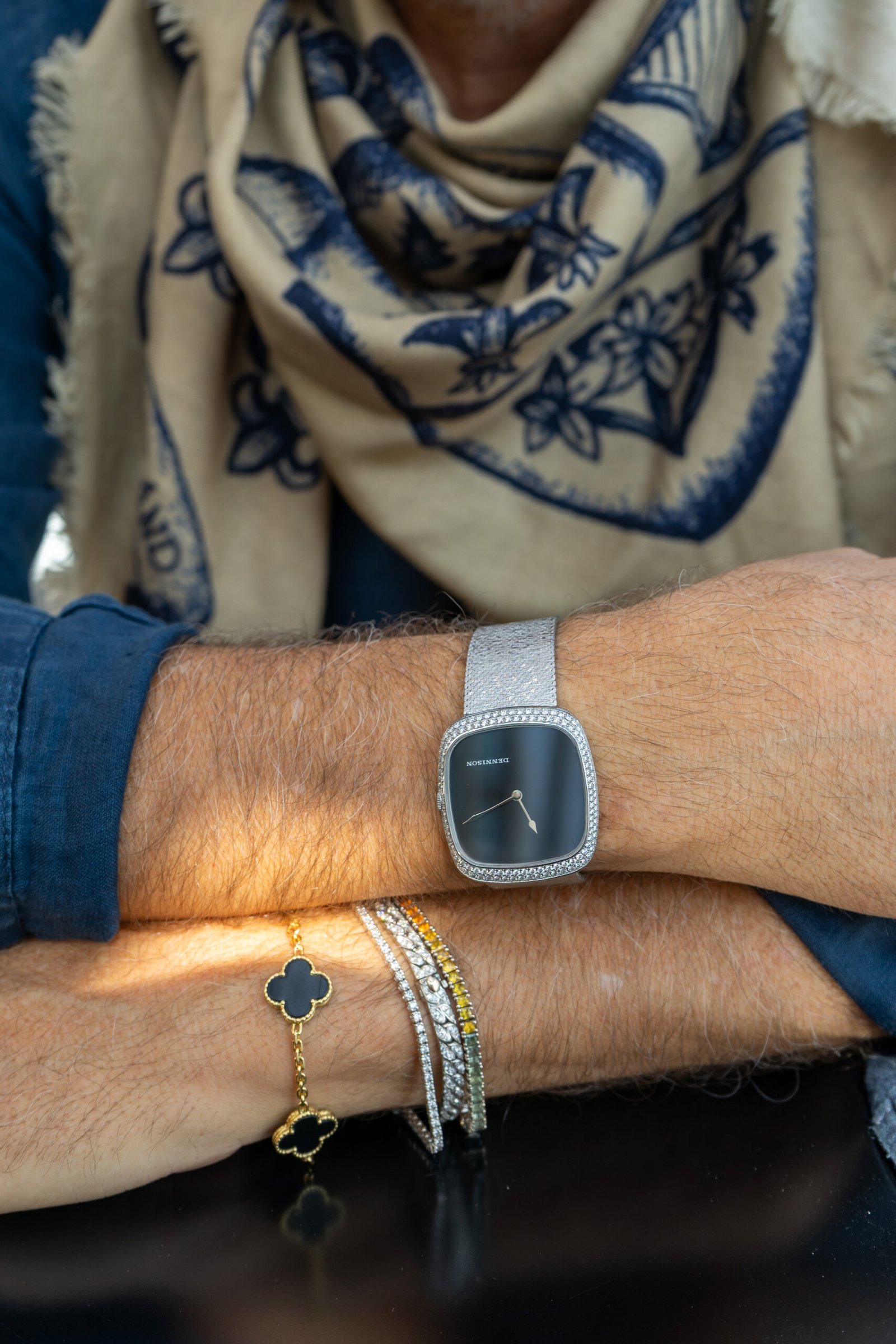
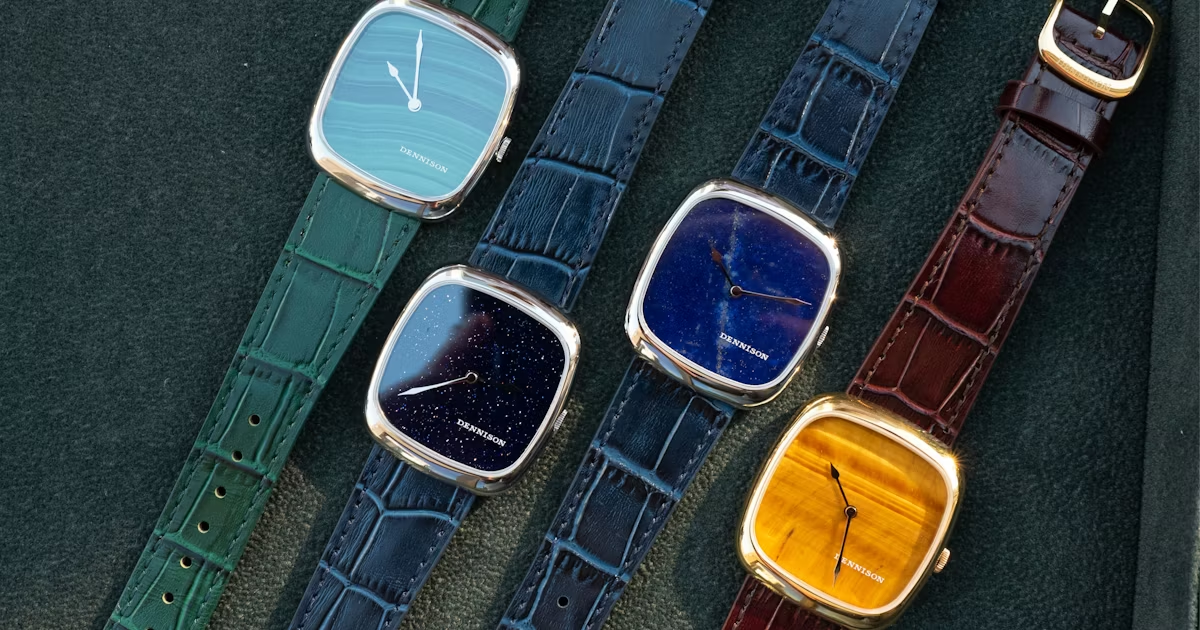
In recent years, Gueit has returned to another fascination: revival with integrity. His work on the relaunch of Dennison reflects his belief that design must respect history without being imprisoned by it. “The brand stopped in 1967,” he explains. “So I thought, let’s continue where it ended. A watch that could have existed in the ’60s or ’70s.” The result is a study in restraint, slim, wearable, quietly confident, and a sharp contrast to the industrial force of watches like the Offshore. It is this range that defines Gueit’s career: from “the Beast” to elegant minimalism, always guided by instinct rather than trend.
Despite his achievements, Gueit is unsparing in his assessment of contemporary watchmaking. Asked what the industry needs next, his answer is immediate: “Design. They’re not creative anymore,” he says. “It’s all about marketing and money. They don’t design anymore. And it’s very painful.” For a man who sees design as play (“I’m a kid in a playground,” he says) the loss of imagination is a personal frustration. When asked how he hopes to be remembered, Gueit doesn’t single out the Offshore or any single icon. Instead, he gestures toward continuity. “My legacy of design,” he says. “Everything I’ve done, and everything my family has done over the last 60 or 70 years.”
Perhaps that is the clearest way to understand Emmanuel Gueit, not as a disruptor chasing success, but as a designer in conversation with time, past, present, and future. In an industry increasingly obsessed with hype, his work reminds us that true icons begin not with marketing plans, but with a pencil, a feeling in the gut, and the courage to trust it.